


COVID-19, Guatemala, and the Cost of Outsourcing Sovereignty


When Emergency Becomes Precedent and Fear Replaces Institutional Judgment
Editorial Note
This article distinguishes carefully between documented facts, official investigations, publicly available records, legislative reports, and the author's analysis. References to governments, international organizations, corporations, public officials, and private entities are intended to examine institutional decisions, incentive structures, public policy, and governance; not to attribute criminal liability or unlawful intent without supporting evidence. Where questions remain unresolved, they are presented as matters deserving continued transparency, scrutiny, and historical examination rather than as established conclusions.
Part I :When History Begins to Rewrite Itself
History rarely changes in a single day. More often, it changes quietly, when documents once dismissed as politically inconvenient begin to accumulate into a body of evidence too substantial to ignore. Crises eventually end, but institutions leave behind records, audits, testimonies, procurement contracts, legislative investigations, and judicial proceedings. Years later, those records frequently tell a more nuanced story than the one citizens were originally asked to accept.
Few events in modern history transformed societies as profoundly as the COVID-19 pandemic. Governments exercised emergency powers on a scale unseen in generations. Borders closed. Economies were suspended. Businesses were forced to shut their doors. Schools remained empty for months. Families buried loved ones under extraordinary restrictions. Entire populations accepted unprecedented limitations on movement, commerce, worship, education, and private life in the name of protecting public health.

Many of these decisions were made under conditions of genuine uncertainty. Policymakers faced a novel virus, incomplete information, and intense public pressure. Yet uncertainty alone cannot permanently shield institutions from accountability. Democracies are not measured merely by how they respond during emergencies, but by whether they later examine those responses with intellectual honesty.
Over time, what initially appeared to be unquestionable public policy has become the subject of intense review. Independent journalists, inspectors general, courts, scientific researchers, national audit offices, and legislative committees across multiple countries have revisited decisions once portrayed as beyond debate. Some early assumptions have been reinforced. Others have been substantially revised. Still others remain unresolved.
One of the most consequential contributions to this ongoing reassessment emerged in December 2024, when the United States House Select Subcommittee on the Coronavirus Pandemic released its final report after nearly two years of investigation. Regardless of political affiliation, the report represents one of the most comprehensive governmental reviews of the pandemic conducted by any democratic legislature. It compiles testimony from scientists, public officials, agency representatives, private organizations, and thousands of pages of documentary evidence. Its significance lies not in settling every debate, but in demonstrating that many questions once dismissed outright deserved serious examination.
Among its principal findings, the report argues that available evidence increasingly supports a laboratory-related origin of SARS-CoV-2 over a purely natural zoonotic spillover; criticizes inadequate oversight of gain-of-function research; questions the transparency surrounding collaborations involving EcoHealth Alliance and the Wuhan Institute of Virology; examines the role of scientific communications that contributed to the early dismissal of the laboratory hypothesis; criticizes aspects of Dr. Anthony Fauci's handling of gain-of-function discussions and public communications; evaluates the effectiveness and consequences of prolonged lockdowns and school closures; reviews vaccine development and oversight; and documents instances of fraud associated with pandemic-related relief and reimbursement programs. Importantly, the report does not conclude that SARS-CoV-2 was intentionally created or deliberately released as a biological weapon, nor does it establish criminal wrongdoing by every institution or individual it criticizes. Its findings instead point toward failures of oversight, transparency, scientific governance, and institutional accountability that merit continued public scrutiny.

That distinction matters.
History is often distorted by two opposite temptations. One insists that every official narrative must be accepted without question. The other assumes that every institutional failure necessarily proves a coordinated conspiracy. Neither approach serves truth. Responsible inquiry demands something more difficult: following evidence wherever it leads, acknowledging uncertainty where it remains, and refusing to confuse ideological certainty with factual demonstration.
The pandemic therefore presents a question that extends far beyond virology. How should free societies govern themselves when fear becomes the dominant political currency?
Part II: Utilitarianism, Emergency Powers, and the Morality of Governing Through Fear
Every public emergency presents governments with an ethical dilemma that predates modern medicine. Before epidemiology, before constitutional law, before international organizations, political philosophy wrestled with a timeless question: how much individual liberty may legitimately be sacrificed for collective security?
Utilitarian philosophy, most closely associated with Jeremy Bentham and John Stuart Mill, proposes that public policy should maximize overall welfare for the greatest number of people. During a rapidly spreading pandemic, such reasoning appears immediately persuasive. Restrict movement to reduce transmission. Suspend commerce to preserve hospital capacity. Close schools to protect vulnerable populations. Delay constitutional liberties temporarily to save lives.
Viewed through this framework, emergency restrictions become morally justifiable because they promise a greater aggregate good.
Yet utilitarianism contains an inherent danger whenever governments possess extraordinary authority. The calculation itself becomes concentrated in the hands of political decision-makers, bureaucratic agencies, and technical committees. Citizens no longer choose their own level of acceptable risk. Instead, institutions determine acceptable sacrifice on their behalf.
The individual gradually ceases to be treated as a decision-maker and instead becomes a variable inside a centralized equation.
Immanuel Kant's deontological ethics offers a profoundly different warning. Human beings possess intrinsic dignity and must never be treated merely as instruments for achieving broader political objectives. Public authorities undoubtedly bear responsibilities to protect life, but those responsibilities do not eliminate the moral obligation to respect individual autonomy, proportionality, due process, and transparency. Emergencies do not suspend ethics; they demand greater ethical discipline.
The tension between these philosophical traditions became one of the defining characteristics of the pandemic.
Many governments justified extraordinary interventions by appealing to collective necessity. In many instances those interventions may indeed have prevented significant harm. In others, however, later evidence suggests that certain measures imposed enormous educational, economic, psychological, and constitutional costs whose long-term consequences were insufficiently considered at the time.
This observation does not imply malicious intent. Human institutions often make imperfect decisions under extraordinary pressure.
But incentives matter.
James Buchanan's Public Choice theory reminds us that governments are not abstract guardians operating outside ordinary human motivations. Politicians respond to electoral incentives. Bureaucracies seek expanded authority, larger budgets, broader jurisdiction, and institutional continuity. Agencies naturally defend their prior decisions because admitting error often carries political and professional costs. Emergencies therefore create environments in which temporary powers risk becoming precedents, while extraordinary administrative discretion gradually normalizes itself.
Milton Friedman famously observed that nothing is more permanent than a temporary government program.
History suggests he understood something deeper than fiscal policy.
Extraordinary powers rarely disappear automatically.
They become institutional habits.
And once societies accept that governments may suspend ordinary freedoms during crises, the central question is no longer whether emergency powers can be justified.
It becomes who decides when the emergency has truly ended.
Part III: When Guatemala Outsourced Sovereignty

Every nation participates in an interconnected international system. No modern economy develops in complete isolation, nor should it. Scientific cooperation, multilateral lending, epidemiological surveillance, humanitarian assistance, and international commerce have generated undeniable benefits throughout the modern era. The question, therefore, is not whether international cooperation is desirable. The more difficult question is whether cooperation eventually evolves into dependency, and whether dependency gradually erodes a nation's ability to exercise independent judgment when extraordinary circumstances arise.
The distinction may appear subtle, yet it lies at the center of Guatemala's experience during the COVID-19 pandemic. A sovereign nation does not cease being sovereign because it listens to recommendations from the World Health Organization, the Pan American Health Organization, the World Bank, or other international institutions. Sovereignty begins to weaken when those recommendations are implemented with minimal adaptation to local realities, limited institutional debate, and little public scrutiny regarding whether they actually fit the country's demographic, economic, and administrative conditions.
Guatemala entered the pandemic carrying structural vulnerabilities that had accumulated over decades. The healthcare system had long struggled with limited infrastructure, uneven access between urban and rural regions, shortages of medical personnel, fragmented procurement systems, and chronic budgetary constraints. Public institutions frequently operated with overlapping responsibilities, while regulatory agencies often lacked the technological capacity necessary to verify information efficiently across different government databases. These were not failures created by COVID-19. They represented long-standing institutional weaknesses that the pandemic merely exposed under extraordinary pressure.
In many respects, Guatemala did not design an independent pandemic strategy so much as it adapted a framework already being adopted throughout much of the world. Border restrictions, mobility limitations, business closures, curfews, mask mandates, school suspensions, emergency procurement procedures, and vaccination campaigns reflected approaches that were simultaneously emerging across numerous jurisdictions. This observation should not be interpreted as evidence of unlawful coordination or external coercion. Countries facing similar uncertainties frequently reach similar policy conclusions. Yet similarity of outcomes does not eliminate an equally important question: to what extent did Guatemala critically evaluate those recommendations against its own constitutional framework, economic structure, institutional capacity, and social realities before transforming them into binding national policy?
This distinction matters because public policy cannot be evaluated solely by the intentions behind it. Thomas Sowell repeatedly reminds policymakers that intentions reveal remarkably little about actual outcomes. Virtually every intervention introduced during the pandemic was presented as necessary, temporary, and designed to protect human life. Few would dispute that protecting life constitutes one of the most legitimate responsibilities of government. The more difficult evaluation concerns whether specific policies ultimately produced benefits proportionate to their economic, educational, constitutional, and institutional costs. Good intentions do not exempt governments from that analysis. If anything, they make such analysis even more necessary, because policies adopted in the name of public welfare often acquire a moral legitimacy that discourages subsequent scrutiny.
This is where Friedrich Hayek's critique of centralized planning becomes particularly relevant to Guatemala's experience. Hayek argued that no central authority possesses sufficient information to coordinate millions of decentralized decisions more effectively than the individuals directly involved. During the pandemic, however, governments around the world (including Guatemala) found themselves making nationwide decisions affecting businesses, schools, transportation systems, religious institutions, manufacturers, agricultural producers, and individual households simultaneously. Such decisions were made under genuine uncertainty, but uncertainty itself cannot eliminate the knowledge problem that Hayek described decades earlier. A ministry cannot fully understand the operational realities of every family-owned restaurant, every rural municipality, every manufacturing facility, every independent physician, every transportation company, or every informal worker. The greater the diversity of local conditions, the greater the difficulty of designing one centralized solution that remains proportionate across the entire country.

For Guatemala, this challenge was intensified by the structure of its own economy. Unlike highly industrialized nations where large corporations dominate employment, Guatemala depends heavily upon small and medium-sized enterprises, family-owned businesses, informal commerce, agricultural production, and self-employment. According to various economic estimates throughout the pandemic, the informal sector represented a substantial share of national employment. For millions of Guatemalans, remaining at home did not simply postpone economic activity; it interrupted the daily income upon which entire households depended. A lockdown therefore carried a different social meaning than it might in countries possessing broader unemployment protections or stronger fiscal capacity.
Milton Friedman frequently observed that public policy must be judged not only by its immediate objectives but also by the incentives it creates. Emergencies often alter institutional incentives in subtle ways. Bureaucracies receive expanded authority. Procurement rules become more flexible. Executive discretion increases. Legislative oversight becomes more difficult under urgent conditions. Judicial review may slow. Administrative procedures that would ordinarily require months of deliberation are compressed into days or even hours. Many of these adjustments are understandable during genuine emergencies. The constitutional question arises later: how many of those exceptional mechanisms become normalized once the emergency subsides?
Guatemala's experience illustrates why this question deserves careful attention. The pandemic accelerated administrative decision-making across multiple ministries while simultaneously reducing many of the procedural safeguards that ordinarily accompany major governmental actions. Emergency procurement expanded. Executive authority grew through repeated states of calamity. Regulatory decisions affecting thousands of businesses were implemented under compressed timelines. Citizens often encountered rapidly changing rules whose legal foundations were difficult to interpret, while public institutions themselves struggled to coordinate implementation across multiple agencies.
None of these observations necessarily imply bad faith. Crises rarely present governments with ideal choices. They require decisions under incomplete information, significant public pressure, and evolving scientific understanding. Yet democratic societies cannot permanently evaluate those decisions according only to the uncertainty that existed when they were made. Institutional maturity requires a second phase: retrospective accountability. Once the immediate emergency passes, governments owe their citizens a transparent explanation of what worked, what failed, what evidence supported particular interventions, what unintended consequences emerged, and how future emergencies should be managed differently.
This principle becomes especially important because constitutional democracies derive legitimacy not only from elections but also from transparency. Citizens delegate extraordinary authority to governments with the expectation that such authority will remain accountable to public scrutiny. Emergencies may justify temporary flexibility, but they do not suspend the obligation to explain decisions after the fact. Indeed, the greater the powers exercised during a crisis, the greater the responsibility to document how those powers were used.
The pandemic therefore raises a broader philosophical question that extends well beyond Guatemala itself. Can a nation genuinely exercise sovereign judgment if its emergency policies become largely reactive to international consensus rather than independently evaluated against its own institutional realities? Cooperation with global organizations is neither inherently virtuous nor inherently problematic. The decisive issue is whether national institutions retain the intellectual independence to distinguish between recommendations that should be adopted, those that should be modified, and those that may require entirely different approaches within their own constitutional and economic context.
For Guatemala, this question would soon move beyond political philosophy and into the practical realities of everyday administration. Sovereignty is not measured solely by speeches, diplomatic recognition, or constitutional language. It is measured by the competence of institutions to implement policy responsibly. And nowhere would that institutional competence be tested more visibly than in one of the smallest administrative mechanisms introduced during the pandemic; a simple online form that, in many ways, revealed far more about the strengths and weaknesses of the Guatemalan state than any presidential address ever could.
Part IV: The Google Form That Reflected an Entire State
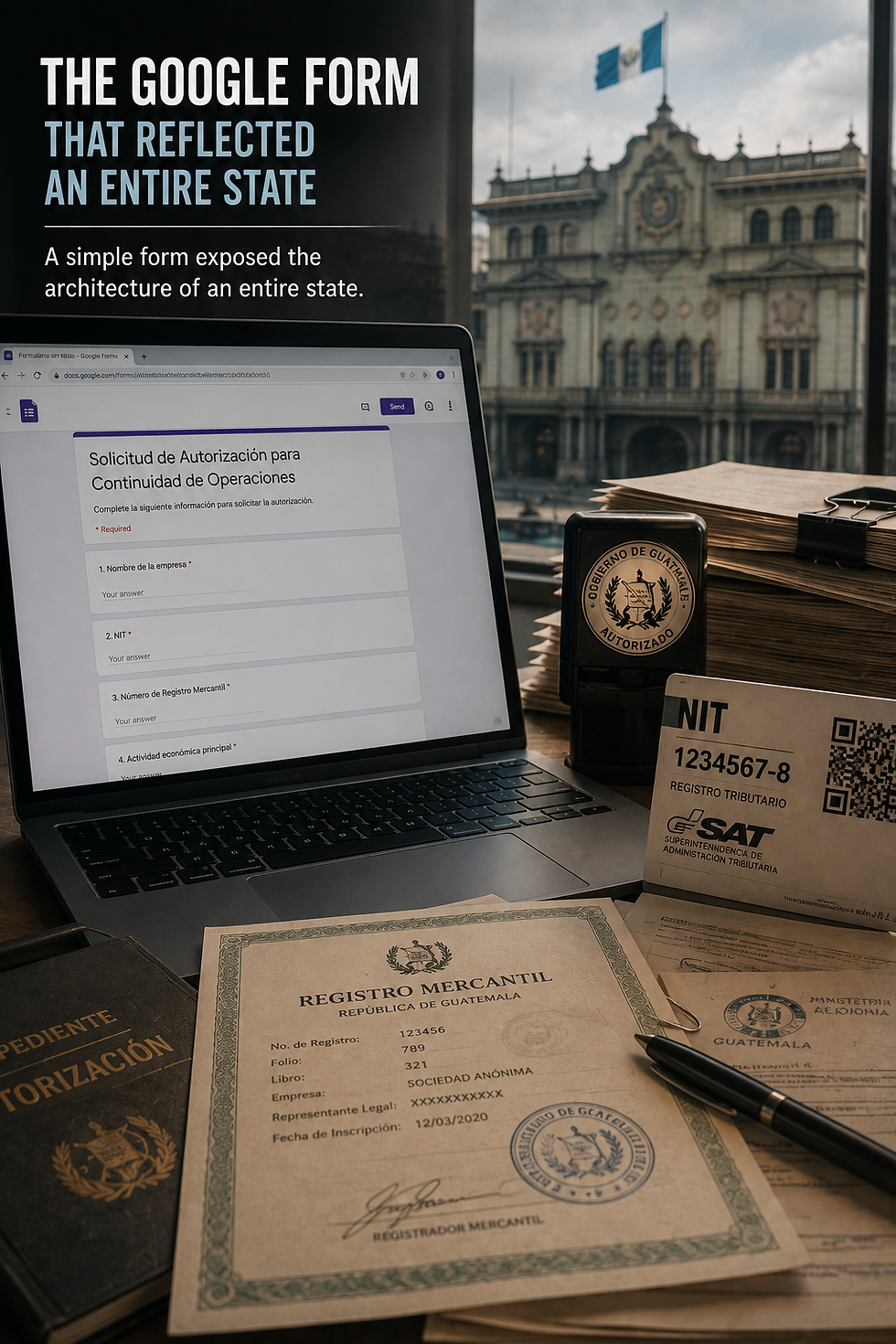
Institutions rarely reveal their true character through grand speeches or carefully drafted policy papers. More often, they reveal themselves in the mundane details of administration; the procedures citizens encounter when attempting to comply with government regulations, the technological systems used to verify information, the safeguards protecting public resources, and the ordinary bureaucratic mechanisms that quietly determine whether public authority operates with competence or merely with appearance. During the pandemic, Guatemala's institutional strengths and weaknesses became visible not only in hospitals or press conferences but in something far less conspicuous: the administrative process through which thousands of businesses requested authorization to continue operating during curfew hours.
Every emergency requires governments to distinguish between activities that must remain operational and those that can temporarily pause. Food distribution cannot simply stop. Medical supply chains cannot suspend operations. Freight transportation, agricultural production, energy infrastructure, telecommunications, and numerous other sectors continue functioning precisely because the rest of society depends upon them. Granting mobility permits to essential industries was therefore not, in itself, an unreasonable policy. The more important question concerns how that policy was implemented.
Public administration derives its legitimacy not merely from issuing regulations but from executing them through procedures that are transparent, secure, verifiable, and proportionate. Citizens reasonably assume that when governments restrict constitutional liberties while simultaneously creating exceptions to those restrictions, the administrative mechanisms supporting those exceptions will meet rigorous institutional standards. Extraordinary governmental authority should be accompanied by equally extraordinary diligence in verification, oversight, and accountability.
Yet the administrative process adopted during part of Guatemala's pandemic response raises important questions regarding institutional preparedness. Businesses seeking authorization for employee mobility during curfew periods were directed to submit information through an online Google Form made available by the Ministry of Economy as part of the emergency process. The form collected business information and personnel data necessary for authorization. Publicly available government guidance directed applicants to use these digital forms to obtain mobility credentials during the emergency. The practical objective was understandable: facilitate rapid processing while minimizing physical contact and reducing administrative congestion. The broader institutional question, however, extends beyond convenience. It concerns whether the underlying verification architecture possessed the safeguards one would reasonably expect when constitutional restrictions and commercial continuity depended upon its proper functioning.
Digital government is not inherently synonymous with good government. Technology merely accelerates whatever institutional capacity already exists. A poorly designed administrative process becomes faster through digitization, but not necessarily more reliable. Conversely, a well-designed digital system can significantly improve transparency, efficiency, and accountability. The quality of digital governance therefore depends less upon the software platform itself than upon the institutional controls embedded within it.
This distinction becomes particularly significant when considering the information submitted through emergency authorization systems. An administrative platform responsible for granting movement privileges during nationwide restrictions ideally operates within a broader ecosystem of governmental verification. Company registration numbers should be capable of validation against official corporate registries. Tax identification should correspond with existing fiscal databases. Authorized legal representatives should be traceable through public records. Submitted information should generate auditable logs, allowing oversight bodies to reconstruct administrative decisions if questions later arise. The objective is not bureaucratic complexity for its own sake but institutional confidence that emergency powers are exercised consistently, lawfully, and transparently.
The publicly available materials describing Guatemala's emergency mobility authorization process do not, by themselves, establish whether automated cross-validation with institutions such as the Mercantile Registry or the Superintendence of Tax Administration occurred behind the scenes. Public documentation primarily explains the submission process rather than detailing every technical verification mechanism operating within government systems. For that reason, it would be inappropriate to conclude that no validation existed solely because it was not publicly described. At the same time, the absence of detailed public documentation regarding verification procedures invites legitimate questions about transparency, interoperability, and administrative resilience. Citizens are entitled to understand not only what information government requests but also how that information is verified before rights, permissions, and restrictions are administered.
The issue therefore extends beyond one online form. It illustrates a broader characteristic of institutional development in many emerging democracies: digital modernization frequently advances more rapidly than institutional integration. Agencies adopt online platforms while underlying databases remain fragmented. Ministries collect information independently rather than through interoperable systems. Administrative processes become digital without necessarily becoming more intelligent. The result is a government that appears technologically modern while continuing to depend heavily upon manual verification, fragmented records, and limited cross-agency coordination.

Ronald Coase taught economists that institutions exist partly to reduce transaction costs. Effective governments lower the cost of compliance, improve legal certainty, and reduce unnecessary friction between citizens and the state. Poorly integrated administrative systems achieve the opposite. They shift uncertainty onto businesses, increase compliance burdens, and create opportunities for inconsistent enforcement because information cannot be verified efficiently across agencies. During ordinary times these inefficiencies produce inconvenience. During national emergencies they become matters of constitutional significance because they determine who may continue operating, who remains economically inactive, and how uniformly restrictions are applied.
James Buchanan's Public Choice framework offers another useful lens through which to examine these processes. Bureaucracies naturally respond to the incentives created by urgent political environments. Faced with unprecedented demand, administrative agencies frequently prioritize speed over institutional refinement. Such prioritization may be understandable during the earliest stages of a crisis, but democratic accountability requires subsequent evaluation of whether temporary procedural shortcuts became normalized without sufficient institutional review. Emergencies should accelerate decision-making without permanently lowering administrative standards.
The experience also exposes a deeper structural issue within the Guatemalan state: institutional fragmentation. Successive governments have invested considerable effort in digitizing individual services, yet true digital governance requires something far more ambitious than isolated online forms. It requires integrated public registries, interoperable databases, secure identity verification, standardized audit trails, and continuous communication between institutions responsible for taxation, commercial registration, public procurement, labor regulation, and judicial oversight. Without such integration, digitization risks becoming cosmetic modernization rather than genuine institutional transformation.
Perhaps the greatest lesson emerging from this seemingly modest administrative episode is that crises rarely create institutional weaknesses, they expose them. The pandemic did not invent fragmented databases, inconsistent administrative coordination, or technological asymmetries within the Guatemalan state. It simply forced those weaknesses into public view under conditions where every procedural deficiency carried heightened economic and constitutional consequences. What appeared to many citizens as merely another government form was, in reality, a reflection of a much larger institutional reality: a state attempting to administer extraordinary powers while still constrained by ordinary structural limitations.
That realization inevitably leads to an even more consequential question. Administrative procedures, however imperfect, represent only one dimension of crisis governance. Far greater implications emerge when emergency powers intersect with public finance. Extraordinary authority is one challenge. Extraordinary spending is another entirely. The pandemic did not merely expand governmental discretion over movement, commerce, and regulation. It also unleashed one of the largest emergency mobilizations of public resources in Guatemala's modern history, raising enduring questions about procurement, accountability, fiscal stewardship, and the institutional safeguards designed to protect taxpayers when urgency replaces ordinary oversight.
Part V: Billions Under Emergency: Procurement, Public Funds, and the Cost of Improvisation

Few institutions reveal their true priorities more clearly than a government's budget during times of crisis. Political speeches often describe aspirations; emergency expenditures expose decisions. When ordinary procurement rules are suspended, competitive bidding is relaxed, oversight mechanisms become more flexible, and billions of quetzales begin moving through accelerated administrative channels, governments are forced to demonstrate not merely whether they possess sufficient financial resources, but whether they possess institutions capable of managing extraordinary power without compromising accountability.
Emergencies inevitably require speed. Hospitals cannot wait months for protective equipment while bureaucratic procedures unfold at their ordinary pace. Physicians require supplies immediately, laboratories need reagents without delay, and healthcare systems facing unprecedented demand cannot operate under procurement timelines designed for routine administrative operations. Every constitutional democracy therefore recognizes that exceptional circumstances justify exceptional procedural flexibility. Yet flexibility and accountability are not mutually exclusive. In fact, the more rapidly public money is spent, the greater the obligation to document every decision, justify every contract, and preserve every audit trail capable of explaining why particular expenditures occurred.
This principle becomes especially significant in countries where institutional capacity has historically struggled with transparency. Guatemala entered the pandemic with longstanding challenges in public procurement, fragmented administrative oversight, limited digital interoperability, and recurring concerns regarding fiscal governance. COVID-19 did not invent these structural conditions. It magnified them under circumstances where the political cost of delaying purchases appeared far greater than the institutional cost of relaxing controls. Governments throughout the world confronted similar dilemmas. The distinguishing factor would ultimately become not whether emergency procurement occurred, but how effectively each country documented, supervised, and later evaluated those decisions.
The magnitude of public resources mobilized during the pandemic was unprecedented in Guatemala's recent history. Emergency appropriations, international loans, humanitarian assistance, health-sector expenditures, social support programs, temporary hospitals, vaccine acquisition, protective equipment, and economic relief initiatives collectively represented one of the largest fiscal interventions ever undertaken by the Guatemalan state outside periods of armed conflict or natural disaster. Such mobilization inevitably created enormous administrative pressure. Ministries that ordinarily managed routine procurement suddenly found themselves responsible for contracts involving millions of dollars, accelerated purchasing timelines, and extraordinary public expectations.
Economists often describe crises as environments in which incentives become amplified rather than suspended. James Buchanan's Public Choice theory provides a useful framework for understanding why. Public officials remain subject to institutional incentives even during emergencies. Bureaucracies seek rapid execution because political leaders demand immediate results. Ministries attempt to minimize administrative delays because delays become politically visible. Oversight agencies frequently confront the difficult balance between ensuring accountability and avoiding accusations of obstructing urgent public action. None of these dynamics necessarily imply corruption. They simply illustrate that governments continue operating through human institutions whose incentives remain present even under extraordinary circumstances.
This reality explains why transparency should never be viewed as an obstacle to emergency response. Transparency is not a luxury reserved for ordinary times. It is the principal mechanism through which extraordinary governmental authority preserves democratic legitimacy. Citizens are far more willing to accept exceptional executive powers when they possess confidence that public resources remain subject to meaningful scrutiny. Conversely, when documentation becomes incomplete, procurement appears inconsistent, or explanations remain insufficient, public confidence begins to erode regardless of whether individual decisions were ultimately justified.
Subsequent reviews by Guatemala's oversight institutions identified numerous administrative observations regarding pandemic-related expenditures. The Office of the Comptroller General, congressional oversight efforts, investigative journalism, and other public accountability mechanisms examined procurement processes involving temporary hospitals, medical equipment, protective supplies, emergency contracts, and health-sector administration. These reviews did not establish that every emergency purchase was improper, nor would such a conclusion be supported by the available evidence. What they did reveal was something perhaps more significant from an institutional perspective: a public administration struggling to reconcile unprecedented urgency with systems that had not been designed to absorb such extraordinary operational pressure.
The distinction between isolated irregularities and systemic institutional weakness is essential. Democratic accountability requires avoiding two equally misleading narratives. One suggests that every emergency expenditure was necessarily corrupt because it occurred under accelerated procedures. The other assumes that the existence of a public health emergency automatically validates every administrative decision made during that period. Neither position withstands careful examination. Extraordinary procurement should be expected during extraordinary crises.
Extraordinary procurement accompanied by insufficient documentation, inconsistent oversight, delayed audits, or avoidable administrative deficiencies deserves equally extraordinary public examination.
Ronald Coase argued that institutions exist to reduce uncertainty and transaction costs within society. Applying this insight to pandemic governance reveals a deeper issue than individual contracts. Citizens should never be forced to speculate about how public money was allocated during a national emergency. The institutional objective should be precisely the opposite: creating sufficiently transparent systems that allow taxpayers, journalists, oversight bodies, researchers, and future policymakers to reconstruct governmental decision-making without relying upon speculation. Transparency reduces uncertainty. Uncertainty, by contrast, becomes fertile ground for both legitimate suspicion and unfounded accusation.
The pandemic also exposed a recurring challenge within developing democracies: the difference between spending capacity and execution capacity. Allocating billions of quetzales through legislative authorization or international financing represents only the beginning of public administration. Effective governance requires procurement expertise, logistical planning, technical evaluation, contract supervision, inventory management, financial controls, auditing mechanisms, and institutional memory. Emergency appropriations cannot instantly create administrative competence. If the underlying institutions lack sufficient operational maturity, additional funding alone cannot guarantee proportional improvements in public service delivery.
This observation extends beyond Guatemala. Throughout the pandemic, countries across every continent confronted similar difficulties. Even highly developed governments experienced procurement controversies, supply-chain failures, inconsistent public messaging, and administrative inefficiencies. The comparison therefore should not be between Guatemala and an imagined system of perfect governance. Thomas Sowell's enduring question remains applicable: compared to what? The more appropriate comparison asks whether Guatemala's institutions emerged from the pandemic stronger, more transparent, and better prepared for future emergencies than they were before 2020. That is ultimately the standard by which institutional learning should be measured.
Perhaps the greatest tragedy of emergency governance is that accountability often arrives only after urgency has disappeared. During the height of the crisis, public attention understandably focused upon infection rates, hospital capacity, and immediate health concerns. Procurement records, contract administration, budget execution, and long-term fiscal implications received comparatively less public scrutiny. Yet history frequently judges governments less by the necessity of emergency spending than by the stewardship demonstrated once the emergency subsides. Extraordinary expenditures become part of the national debt long after temporary hospitals have closed and daily case counts have disappeared from the headlines. Future generations inherit not only the financial obligations created during crises but also the institutional precedents established while those crises unfolded.
The pandemic therefore left Guatemala with a question that extends well beyond accounting. How should democratic societies evaluate emergency spending once the urgency that originally justified it has faded? Fiscal responsibility is not measured solely by how quickly governments mobilize resources during national emergencies. It is measured equally by whether those resources can later be explained, audited, reconstructed, and defended before the citizens whose taxes ultimately financed them.
Among all the financial decisions made during the pandemic, however, none would come to symbolize the intersection of urgency, international politics, public expectation, and institutional controversy more vividly than Guatemala's procurement of vaccines. The story of vaccination was never merely about public health. It became an examination of contract negotiation, executive decision-making, international supply chains, fiscal stewardship, and the difficult balance between acting quickly enough to protect lives while remaining sufficiently transparent to preserve public trust.
Part VI: Sputnik V - When Urgency, Diplomacy, and Public Procurement Collided
Few episodes during Guatemala's pandemic response illustrate the complexity of emergency governance more clearly than the acquisition of COVID-19 vaccines. Vaccination campaigns were never merely scientific undertakings. They simultaneously became diplomatic negotiations, logistical operations, procurement exercises, political commitments, fiscal obligations, and symbols of governmental competence. Every government faced the same fundamental dilemma: move too slowly and risk preventable deaths; move too quickly without sufficient institutional safeguards and risk compromising transparency, contractual oversight, and public confidence. Guatemala found itself navigating precisely that tension.
The global vaccine market that emerged during 2020 and 2021 bore little resemblance to ordinary pharmaceutical procurement. Demand exceeded supply on an unprecedented scale. Wealthier nations negotiated advance purchase agreements months before regulatory approvals were completed. Manufacturers allocated production according to contractual commitments that frequently favored countries capable of paying earlier or purchasing larger quantities. Export restrictions, manufacturing delays, geopolitical rivalries, intellectual property debates, and fragile supply chains transformed vaccine acquisition into one of the most competitive procurement environments in modern history. Governments around the world were therefore negotiating under extraordinary pressure, often with incomplete information and rapidly changing production schedules.
Against this backdrop, Guatemala sought to diversify its vaccine portfolio through multiple international channels. Like many countries, it participated in the COVAX initiative while simultaneously negotiating bilateral agreements with individual manufacturers. Diversification was a rational objective. Depending exclusively upon a single supplier would have exposed the country to additional supply-chain risks at a moment when production capacity remained highly uncertain across the entire pharmaceutical industry.
Yet diversification alone could not eliminate another challenge: institutional due diligence.
Among the agreements reached during this period, none generated greater public debate than Guatemala's contract for the Russian-developed Sputnik V vaccine. The agreement quickly became more than a procurement decision. It evolved into a national conversation about contract negotiation, advance payments, delivery schedules, governmental accountability, and the institutional mechanisms available to protect public resources when extraordinary urgency compressed ordinary procurement timelines.
One of the principal concerns surrounding the Sputnik V agreement involved the substantial advance payment made before the complete delivery of the contracted doses. Advance payments are not inherently unusual in international procurement, particularly when manufacturers face overwhelming global demand and rapidly expanding production commitments. Numerous governments accepted contractual conditions during the pandemic that would have appeared extraordinary under ordinary commercial circumstances. The critical issue therefore was not the existence of advance payments themselves but the degree to which contractual safeguards adequately protected the public interest if deliveries failed to occur according to schedule.
As delays accumulated, public confidence inevitably began to deteriorate. Citizens observed that significant public funds had already been transferred while vaccine deliveries proceeded more slowly than originally anticipated. Government officials repeatedly explained that manufacturing limitations, export logistics, and international supply constraints affected numerous countries simultaneously. Those explanations reflected genuine challenges experienced throughout the global vaccine market. Nevertheless, from the perspective of public administration, the central question gradually shifted. The debate was no longer focused exclusively on why deliveries had been delayed. Increasingly, it centered on whether Guatemala had negotiated contractual conditions sufficiently robust to protect taxpayers under precisely such circumstances.
This distinction reflects one of the oldest principles of public finance. Governments cannot control every external event affecting international markets. They cannot compel foreign manufacturers to accelerate production, eliminate global shortages, or resolve geopolitical disruptions. What governments can control is the quality of the agreements they negotiate, the legal protections they obtain, the financial exposure they accept, and the transparency with which they communicate those risks to the public before committing public resources.
Ronald Coase argued that institutions exist to reduce uncertainty rather than amplify it. Effective contracts perform precisely this function. They establish expectations before disagreements emerge, allocate responsibilities before problems occur, and define remedies before obligations remain unfulfilled. During emergencies, however, the political pressure to secure immediate solutions frequently compresses the time available for careful contractual analysis. Governments become tempted to prioritize rapid execution over comprehensive risk allocation, believing that speed itself constitutes the highest public good. Yet urgency cannot permanently substitute for institutional discipline. The greater the uncertainty surrounding an international transaction, the greater the importance of carefully constructed contractual protections.
The Sputnik V episode also revealed how public expectations evolve during prolonged crises. Citizens who initially tolerated extraordinary governmental discretion because of the emergency gradually began demanding more detailed explanations regarding procurement decisions, delivery schedules, contractual obligations, and financial safeguards. This evolution should not be interpreted as political opportunism. It reflects a fundamental characteristic of constitutional democracies. Emergency authority derives much of its legitimacy from public trust. When uncertainty persists, transparency becomes the primary mechanism through which that trust is maintained.
Importantly, the broader lessons emerging from the Sputnik V experience should not be interpreted as judgments regarding the scientific merits or effectiveness of any particular vaccine. Around the world, multiple COVID-19 vaccines demonstrated varying degrees of effectiveness against severe disease and death, while each product also faced distinct logistical, regulatory, and manufacturing challenges. The institutional questions raised by Guatemala's procurement process concern governance rather than immunology. They examine how contracts were negotiated, how risks were communicated, how public funds were protected, and how governmental accountability functioned under exceptional pressure.
In retrospect, the significance of the Sputnik V controversy lies less in the vaccine itself than in what it revealed about the architecture of emergency governance. It demonstrated how rapidly public health policy can become intertwined with diplomacy, international commerce, fiscal management, and domestic political legitimacy. It also reminded democratic societies that successful crisis management depends not only upon scientific expertise but equally upon competent public administration, transparent procurement, and institutions capable of balancing urgency with accountability.
Yet vaccine procurement represented only one component of a much broader fiscal picture. As vaccination campaigns expanded, governments around the world continued allocating enormous financial resources through relief programs, emergency subsidies, temporary healthcare infrastructure, social assistance, and extraordinary budgetary measures. Guatemala was no exception. The next chapter therefore moves beyond contracts and vaccines to examine a more comprehensive question: what lasting economic legacy did the pandemic leave behind, and how effectively did public spending translate into institutional resilience rather than temporary political response?

Part VII: The Economic Cost No Daily Press Conference Could Measure
One of the greatest illusions produced by every national emergency is the tendency to evaluate success exclusively through the indicators that governments choose to publish. During the pandemic, daily dashboards displayed confirmed infections, hospital occupancy, intensive care capacity, vaccination rates, recoveries, and fatalities. These statistics undoubtedly mattered. Public health authorities required measurable indicators to allocate resources and monitor the evolution of the outbreak. Yet every measurement inevitably leaves something unmeasured. Governments naturally focus public attention on variables they can quantify. Entire dimensions of economic, institutional, and social reality remain largely invisible; not because they are unimportant, but because they are far more difficult to capture through daily statistics.
Frédéric Bastiat described this phenomenon nearly two centuries ago in his famous essay That Which Is Seen, and That Which Is Not Seen. Every public intervention produces visible effects that immediately attract political attention, while simultaneously generating indirect consequences that unfold gradually across society.
Citizens readily observe the construction of temporary hospitals, emergency procurement, vaccination centers, and government relief programs. Far less visible are the businesses that quietly disappear, the entrepreneurs who abandon expansion plans, the students whose educational trajectories permanently change, the delayed cancer diagnoses, the postponed surgeries, the deteriorating mental health of isolated families, the migration of skilled workers, the investment decisions never made, and the public debt that future taxpayers will ultimately inherit.
These invisible costs are no less real simply because they cannot be summarized during a televised press conference.
Guatemala entered the pandemic as one of Latin America's most entrepreneurial societies, yet also one of its most economically fragile. Small and medium-sized enterprises constituted the backbone of employment, while informal economic activity represented the principal source of income for millions of households. For many Guatemalans, remaining at home did not simply reduce discretionary spending or postpone leisure activities. It interrupted the daily cash flow upon which food, transportation, rent, education, and basic household expenses depended. Unlike larger economies capable of sustaining prolonged income replacement through expansive fiscal programs, Guatemala possessed limited financial capacity to compensate indefinitely for mandatory reductions in economic activity.
This structural reality transformed every restriction into a profoundly unequal experience. Professionals capable of working remotely often continued generating income through digital platforms. Large corporations generally possessed greater financial reserves, diversified supply chains, and stronger banking relationships that allowed them to absorb temporary disruptions. By contrast, street vendors, family-owned restaurants, neighborhood shops, market merchants, independent drivers, agricultural workers, tourism operators, artisans, and countless self-employed citizens frequently confronted a far more immediate dilemma. For them, economic inactivity did not represent inconvenience. It represented the disappearance of their primary means of subsistence.
This asymmetry illustrates one of Thomas Sowell's most enduring observations regarding public policy. Decisions should never be evaluated solely according to their stated intentions but according to the incentives and consequences they produce across different segments of society. Pandemic restrictions may have pursued legitimate public health objectives, yet their economic burden was not distributed equally. Individuals possessing greater capital, stronger liquidity, and more adaptable business models generally enjoyed greater resilience than those operating at the margins of economic security. The crisis therefore magnified preexisting inequalities in institutional capacity rather than creating entirely new ones.
James Buchanan's Public Choice framework adds another layer to this analysis. Governments frequently evaluate policies according to aggregate outcomes (national infection curves, macroeconomic indicators, or fiscal aggregates) while citizens experience those same policies individually. A nationwide reduction in mobility may appear statistically effective, yet its human consequences differ dramatically depending upon one's occupation, geographic location, savings, technological access, or family circumstances. Public administration inevitably operates through averages. Real life rarely does.
The educational consequences of prolonged school closures provide another example of Bastiat's "unseen" costs. Classrooms may have fallen silent in an effort to reduce viral transmission, but learning itself did not pause equally across society. Students possessing reliable internet connections, private study environments, parental supervision, and digital devices adapted more successfully to remote instruction than those living in households with limited connectivity or multiple children sharing a single device. Education, unlike many forms of economic activity, cannot simply be paused and resumed without long-term consequences. Lost months of foundational learning frequently compound over years, influencing future productivity, labor market opportunities, and intergenerational mobility.
Healthcare itself experienced similar trade-offs. Public attention understandably concentrated on COVID-19 patients, intensive care capacity, and emergency treatment. Yet healthcare systems possess finite resources. As personnel, facilities, and financial resources shifted toward pandemic response, routine preventive care, chronic disease management, elective surgeries, and diagnostic services frequently experienced delays. These consequences rarely appeared alongside daily COVID statistics, yet they formed part of the broader health legacy inherited by post-pandemic societies. Public health extends beyond one disease. Effective healthcare systems must continually balance competing priorities, even during extraordinary emergencies.
The fiscal consequences proved equally enduring. Governments across the world financed emergency responses through combinations of existing revenues, domestic borrowing, multilateral lending, and international financial assistance. Guatemala similarly mobilized significant resources to support healthcare, social programs, emergency procurement, and economic stabilization. Such expenditures may have been justified under extraordinary circumstances. Nevertheless, public debt possesses a unique characteristic absent from most emergency policies: it survives long after the crisis itself has ended. Future taxpayers ultimately finance today's emergency decisions, making transparency and efficiency matters not only of present accountability but of intergenerational justice.
Milton Friedman frequently warned that temporary governmental expansions often outlive the crises that originally justified them. Fiscal policy illustrates this principle particularly well. Emergency appropriations create administrative structures, contractual relationships, institutional expectations, and political constituencies that may persist beyond the circumstances that gave rise to them. Responsible governance therefore requires not only mobilizing resources during emergencies but establishing clear mechanisms for evaluating which extraordinary measures should conclude once ordinary conditions return.
Perhaps the most enduring economic lesson of the pandemic is that prosperity cannot be measured exclusively through gross domestic product or fiscal expenditures. Healthy economies derive their resilience from trust; trust that contracts will be honored, regulations will remain predictable, institutions will operate transparently, and governments will exercise extraordinary powers with restraint. Once uncertainty extends beyond epidemiology into legal stability and institutional reliability, investment decisions begin changing long before official statistics capture the transformation. Entrepreneurs postpone expansion. Foreign investors reassess risk. Families increase precautionary savings. Innovation slows, not because creativity disappears, but because uncertainty becomes more expensive than opportunity.
This broader perspective ultimately returns us to the central question introduced at the beginning of this essay. The pandemic was never solely a public health crisis. It became an institutional stress test for constitutional democracies across the world. Some weaknesses emerged from underfunded healthcare systems. Others originated in fragmented public administration. Still others reflected deeper philosophical assumptions regarding the relationship between government authority, scientific expertise, economic freedom, and individual responsibility. Guatemala experienced each of these dimensions simultaneously.
Yet one final element remains essential before drawing broader conclusions. Throughout the pandemic, governments rarely acted in complete isolation. International organizations, multilateral financial institutions, regional health agencies, and global scientific networks exercised considerable influence over national decision-making. Cooperation itself is neither inherently problematic nor inherently virtuous. The critical question concerns how sovereign nations evaluate external recommendations while preserving independent constitutional judgment. To understand Guatemala's experience fully, we must therefore examine not only domestic institutions but also the international architecture within which many of those domestic decisions were made.
Part VIII: Global Governance, National Sovereignty, and the Limits of International Consensus
The COVID-19 pandemic did not merely expose weaknesses within national governments. It also revealed something far more profound about the architecture of modern governance itself. Never before had so many countries simultaneously adopted remarkably similar public policies under conditions of profound uncertainty. Border closures, nationwide lockdowns, school suspensions, mobility restrictions, vaccine procurement strategies, emergency fiscal packages, and public health messaging appeared with extraordinary consistency across vastly different political systems, legal traditions, economic structures, and cultural realities. While the intensity and duration of these measures varied considerably, the overall direction of policy exhibited an unprecedented degree of international convergence.
Some observers interpreted this convergence as evidence of an organized global political agenda. Others regarded it as the natural consequence of governments confronting the same biological threat while relying upon the same scientific information. Reality is likely more complex than either explanation alone. International coordination during global health emergencies is neither inherently suspicious nor inherently virtuous. Modern pandemics do not recognize national borders, and scientific collaboration has undoubtedly saved countless lives throughout history. Yet acknowledging the value of international cooperation should never eliminate another equally legitimate democratic question: where does cooperation end, and where does independent national judgment begin?
This distinction lies at the heart of constitutional sovereignty. Sovereignty has never implied isolation. Throughout history, nations have signed treaties, participated in multilateral institutions, adopted international technical standards, and cooperated in matters ranging from aviation safety to infectious disease surveillance. Such cooperation often produces substantial public benefits. However, constitutional democracies derive their legitimacy not from international consensus but from the accountability of their own institutions to their own citizens. Recommendations issued by international organizations may possess considerable technical authority, but democratic legitimacy remains rooted in national constitutional processes.
For smaller economies such as Guatemala, this distinction becomes especially important. Unlike major geopolitical powers capable of independently financing large-scale scientific research, pharmaceutical development, or epidemiological surveillance, developing countries naturally depend more heavily upon external expertise, multilateral lending, and international technical assistance. Organizations such as the World Health Organization, the Pan American Health Organization, the World Bank, the International Monetary Fund, and numerous bilateral development agencies have long played significant roles in supporting Guatemala's public health infrastructure, institutional development, and fiscal capacity. Their participation has frequently generated measurable improvements in vaccination campaigns, disease surveillance, maternal health, infrastructure, and technical training. Recognizing these contributions is both historically accurate and intellectually necessary.
Yet cooperation carries its own institutional risks when it gradually evolves into intellectual dependency.
Alexis de Tocqueville observed nearly two centuries ago that democratic societies possess a subtle tendency to transfer increasing responsibility from local institutions toward larger centralized authorities whenever uncertainty intensifies. Citizens confronted with extraordinary danger frequently become willing to exchange portions of their own decision-making authority for promises of security administered by increasingly distant institutions. Tocqueville did not argue that centralized authority is always illegitimate. Rather, he warned that democracies often surrender local judgment incrementally, believing each transfer of authority to be temporary, only to discover later that institutional habits prove far more durable than the emergencies that originally justified them.
The pandemic illustrated this dynamic with remarkable clarity. Scientific recommendations developed within international organizations understandably influenced national policy discussions across the world. However, recommendations are not constitutional commands. They are technical guidance intended to inform decision-making rather than replace it. Every sovereign government retains the responsibility to evaluate those recommendations according to its own legal framework, demographic structure, healthcare capacity, economic resilience, educational realities, and constitutional protections. Identical recommendations may produce entirely different outcomes depending upon the institutional environment in which they are implemented.
This is precisely where Friedrich Hayek's critique of centralized knowledge acquires renewed relevance. Hayek argued that no centralized authority (regardless of expertise) can fully possess the dispersed knowledge held within millions of individual actors throughout society. His argument extended beyond economics. Knowledge itself remains decentralized. Local physicians understand community health conditions differently than international advisory committees. Municipal leaders possess information unavailable to national ministries. Small business owners understand operational realities invisible within macroeconomic models. Families understand risks that cannot be fully incorporated into national policy frameworks. Effective governance therefore depends not upon rejecting expert knowledge but upon integrating centralized expertise with decentralized local understanding.
The challenge arises when international consensus gradually becomes politically indistinguishable from scientific certainty. During the pandemic, many governments understandably relied upon global guidance while evidence continued evolving. Yet scientific consensus itself is neither static nor infallible. Throughout the history of medicine, recommendations have changed as new evidence emerged. This process does not represent failure; it represents the normal functioning of science. Problems emerge only when evolving scientific hypotheses become translated into rigid political orthodoxy before sufficient evidence has accumulated to justify such certainty.
Karl Popper repeatedly emphasized that scientific progress depends upon openness to refutation. No hypothesis becomes scientifically stronger by suppressing competing explanations. On the contrary, robust hypotheses survive precisely because they withstand sustained criticism. Democratic societies should therefore resist the temptation to confuse disagreement with misinformation simply because disagreement complicates public communication. Effective public health messaging undoubtedly requires clarity. Scientific inquiry requires something equally important: humility.
This philosophical distinction carries significant institutional implications. Governments inevitably make decisions under uncertainty. Citizens generally recognize this reality. What erodes public confidence is not the existence of uncertainty itself but the perception that uncertainty has been concealed, minimized, or transformed into unwarranted certainty for political or administrative convenience. Public trust depends less upon governments always being correct than upon their willingness to acknowledge the limits of available knowledge while remaining transparent about the reasoning supporting their decisions.
For Guatemala, these questions became inseparable from the broader issue of institutional maturity. A sovereign nation should neither reject international expertise reflexively nor adopt it uncritically. True sovereignty is demonstrated through discernment. It consists of the capacity to evaluate external recommendations independently, adapt them responsibly to domestic realities, and explain those adaptations transparently to the public. Cooperation should strengthen national institutions rather than substitute for them.
The Christian tradition offers a complementary perspective through the principle of stewardship. Stewardship does not reject counsel from others. Scripture repeatedly praises wisdom gained through prudent advice. Yet stewardship also imposes personal responsibility. Kings, judges, and governors remain accountable for the decisions they themselves make, regardless of whose counsel they followed. Proverbs repeatedly celebrates wise counsel while simultaneously emphasizing discernment, prudence, and personal accountability. International recommendations may inform public policy, but they cannot replace the moral responsibility borne by national leaders before their own citizens.
Ultimately, the pandemic forces constitutional democracies to confront a question extending well beyond public health. How should free societies balance scientific expertise, international cooperation, democratic accountability, and constitutional liberty without allowing any one principle to eliminate the others? There exists no simple formula capable of resolving this tension permanently. Democratic governance requires continuous adjustment as evidence evolves, circumstances change, and institutions learn from experience.
Guatemala's experience demonstrates that sovereignty is not measured by rhetorical declarations of independence. It is measured by the strength of institutions capable of engaging confidently with the international community while preserving independent constitutional judgment. Nations that merely imitate external policies risk importing not only foreign solutions but also foreign mistakes. Nations that reject all external knowledge isolate themselves unnecessarily. Mature democracies pursue a more demanding path: they cooperate extensively, evaluate independently, and decide responsibly.
That principle brings us to perhaps the most enduring lesson of the pandemic. COVID-19 was never solely a public health emergency. It became a constitutional stress test exposing the resilience (or fragility) of every institution entrusted with governing modern societies. Hospitals, ministries, legislatures, courts, universities, international organizations, private industry, scientific agencies, and civil society all emerged transformed by the experience. The final question therefore is no longer whether mistakes occurred. History has already established that they did. The more important question is whether democratic societies possess the institutional humility to learn from them before the next global emergency inevitably arrives.
Part IX: The Pandemic as a Constitutional Mirror - What Guatemala Must Learn Before the Next Crisis
History possesses a remarkable tendency to expose institutional truths that ordinary political debate often conceals. Elections come and go. Governments change. Ministers resign. International headlines shift toward the next global emergency. Yet institutions remain, carrying forward the precedents established during moments of extraordinary pressure. Long after infection curves disappear and daily press conferences fade into archival footage, constitutional democracies continue living with the legal, administrative, fiscal, and cultural consequences of the decisions made during those uncertain months.
For Guatemala, the COVID-19 pandemic should not be remembered exclusively as a public health emergency. Doing so would reduce one of the most significant institutional events of recent decades to a purely epidemiological narrative. The pandemic was simultaneously a constitutional test, an economic stress test, an administrative stress test, and, perhaps most importantly, a test of national maturity. It forced every institution (from the Executive Branch to Congress, from the healthcare system to the judiciary, from universities to private businesses) to operate under extraordinary pressure while making decisions whose consequences would extend far beyond the emergency itself.
Some decisions undoubtedly saved lives. Others likely mitigated immediate risks during periods of profound scientific uncertainty. It would be historically inaccurate and intellectually dishonest to suggest that every governmental action lacked justification simply because later evidence altered our understanding of the virus. Policymakers throughout the world confronted circumstances for which no modern generation possessed a complete playbook. The uncertainty they faced was genuine, and any serious historical assessment must begin by acknowledging that reality.
Yet acknowledging uncertainty cannot become a substitute for accountability.
Democratic societies distinguish themselves from authoritarian systems precisely because they retain the capacity to evaluate their own decisions after the crisis has passed. Constitutional government is not defined by the absence of mistakes. It is defined by the willingness to recognize them openly, investigate them honestly, correct them institutionally, and learn from them collectively. Institutions that refuse self-examination gradually lose public confidence not because they were imperfect, but because they become incapable of institutional humility.
The pandemic revealed that Guatemala's greatest vulnerabilities were not biological. They were structural. Fragmented digital infrastructure, inconsistent administrative coordination, limited procurement capacity, uneven regulatory oversight, bureaucratic improvisation, dependence upon external technical guidance, and longstanding weaknesses in public governance all became visible under the pressure of an emergency that demanded extraordinary institutional competence. COVID-19 did not create these deficiencies. It merely accelerated their exposure.
This realization should fundamentally reshape how future reforms are understood. The objective cannot simply be to prepare for another pandemic. Public policy focused exclusively on the next virus risks misunderstanding the broader lesson. Guatemala must prepare for the next institutional stress test, whatever form it ultimately takes. Whether the future challenge emerges through another pandemic, a cyberattack, a financial crisis, a natural disaster, geopolitical instability, or a major migration emergency, the underlying institutional requirements remain remarkably similar.
Governments capable of responding effectively under extraordinary circumstances are not built during emergencies. They are built during periods of stability through transparent institutions, competent public administration, technological modernization, sound legal frameworks, and disciplined fiscal stewardship.
This is where political philosophy once again intersects with constitutional reality. Friedrich Hayek warned that societies often overestimate the capacity of centralized authorities to process complex information during rapidly changing circumstances. James Buchanan reminded us that governments remain composed of individuals responding to incentives rather than abstract guardians operating outside ordinary political dynamics. Ronald Coase demonstrated that institutions exist to reduce uncertainty through clearly defined rules rather than discretionary improvisation.
Thomas Sowell consistently argued that every public policy must be evaluated not according to intentions but according to measurable outcomes and unintended consequences. Frédéric Bastiat cautioned generations of policymakers to examine not only what government interventions visibly accomplish but also what they quietly displace beneath the surface.
Remarkably, these thinkers reached similar conclusions despite writing in different centuries and addressing entirely different subjects. Strong societies do not emerge from larger bureaucracies alone. They emerge from better institutions; institutions capable of balancing authority with accountability, expertise with humility, efficiency with transparency, and leadership with constitutional restraint.
For Guatemala, this balance carries particular importance because institutional trust has historically been fragile. Citizens often evaluate governments not by ideological promises but by lived administrative experience. They remember whether permits were processed efficiently, whether procurement appeared transparent, whether public resources produced visible improvements, whether regulations remained predictable, and whether extraordinary governmental powers eventually receded once ordinary constitutional order returned. Trust is therefore accumulated incrementally through institutional behavior rather than political rhetoric.
The pandemic also revealed something deeper about sovereignty itself. Sovereignty should never be confused with isolationism, nor should international cooperation be confused with submission. A mature republic neither rejects external expertise nor accepts it uncritically. Instead, it develops the institutional confidence necessary to evaluate global recommendations through its own constitutional principles, economic realities, demographic conditions, and national priorities. International organizations contribute valuable technical knowledge. Ultimately, however, responsibility for governing Guatemala belongs to Guatemalan institutions accountable to Guatemalan citizens under Guatemalan law.
Perhaps this is the most enduring lesson of all. National resilience cannot be imported. It cannot be purchased through international loans, negotiated through diplomatic agreements, or outsourced to multilateral organizations. External partnerships may strengthen institutional capacity, but they cannot replace the difficult work of building trustworthy public administration from within. Constitutional democracies become resilient not because they avoid crises but because they cultivate institutions capable of confronting uncertainty without abandoning the principles that justify their authority in the first place.
There is also a moral dimension that economics and constitutional law alone cannot fully explain. Every emergency confronts societies with a temptation as old as civilization itself: the temptation to believe that fear justifies abandoning the disciplines that ordinarily restrain power. Scripture repeatedly warns that wisdom is inseparable from discernment, that stewardship requires accountability, and that authority exists ultimately to serve rather than dominate. Governments, like individuals, remain accountable for how they exercise the responsibilities entrusted to them. Emergencies may alter circumstances, but they do not suspend moral responsibility.
The Book of Proverbs reminds us that "the prudent sees danger and hides himself, but the simple go on and suffer for it" (Proverbs 22:3). Prudence, however, is not synonymous with panic. It is the disciplined capacity to recognize danger while preserving sound judgment. Likewise, Micah's call "to act justly, to love mercy, and to walk humbly" (Micah 6:8) speaks not only to individual character but also to public leadership. Justice demands transparency. Mercy demands compassion for those most affected by policy decisions. Humility demands recognizing that no institution, no government, and no scientific authority possesses perfect knowledge during moments of profound uncertainty.
History will undoubtedly continue debating the origins of SARS-CoV-2, the proportionality of lockdowns, the effectiveness of specific interventions, the oversight of scientific research, and the decisions made by governments across the world. Those debates are both legitimate and necessary. Yet Guatemala's greatest opportunity does not lie in relitigating every controversy of the past. It lies in asking a more constructive question: What kind of institutions must we build so that the next national emergency strengthens rather than weakens our constitutional republic?
That question transcends COVID-19.
It concerns the future of democratic governance itself.
Because pandemics eventually end.
States of emergency eventually expire.
Presidents eventually leave office.
International organizations revise their recommendations.
Scientific understanding continues evolving.
Debt is eventually repaid.
Hospitals return to ordinary operations.
Markets recover.
Children grow into adults.
But the institutional precedents established during moments of fear often endure for generations.
The true legacy of COVID-19, therefore, will not ultimately be measured by infection curves, procurement contracts, vaccination statistics, or emergency decrees. It will be measured by whether societies possessed the wisdom to transform one of the greatest crises of the twenty-first century into an opportunity for constitutional renewal rather than institutional complacency.
For Guatemala, that work has only just begun.
Part X: The Political Economy of Permanent Emergencies
One of the least discussed consequences of the COVID-19 pandemic is not epidemiological, economic, or even political in the conventional sense. It is constitutional. Emergencies possess a unique characteristic that distinguishes them from ordinary public policy: they temporarily alter the relationship between citizens and the state. During periods of normal governance, constitutional democracies operate through carefully distributed powers, procedural safeguards, legislative oversight, judicial review, competitive procurement, public debate, and predictable regulatory frameworks. Emergencies, however, compress these mechanisms into accelerated decision-making processes where executive discretion expands while institutional friction is intentionally reduced. Such flexibility may be necessary under extraordinary circumstances, but history repeatedly demonstrates that temporary powers often leave permanent institutional footprints.
Political philosophers have long recognized this dynamic. Extraordinary circumstances frequently justify extraordinary authority because governments must act faster than ordinary constitutional procedures sometimes allow. Yet every expansion of executive discretion raises a question that remains relevant long after the emergency itself has ended: how does a constitutional republic ensure that powers granted temporarily do not gradually redefine the ordinary relationship between the state and its citizens?
Milton Friedman famously observed that "nothing is so permanent as a temporary government program." Although he was primarily referring to fiscal policy, the observation extends far beyond economics. Governments rarely relinquish newly acquired administrative capacities without resistance. Emergency procurement systems become permanent procurement mechanisms. Temporary regulatory authorities evolve into standing bureaucratic structures. Exceptional surveillance powers become normalized security tools. Administrative precedents created during crises quietly influence future governance, often long after citizens have forgotten the circumstances that originally justified them.
Friedrich Hayek approached this question from a different perspective. He argued that centralized authority inevitably expands during periods of uncertainty because uncertainty creates public demand for decisive leadership. Citizens understandably seek coordination when facing unknown dangers. Yet Hayek warned that crises can produce an illusion of administrative omniscience; the belief that centralized institutions possess sufficient information to coordinate millions of decentralized decisions more effectively than society itself. The danger is not that governments should refrain from acting during emergencies. The danger lies in assuming that extraordinary centralization remains equally effective once the immediate crisis begins to evolve into a more complex social, economic, and constitutional challenge.
James Buchanan's Public Choice theory adds another dimension that deserves equal attention. Institutions, like individuals, respond to incentives. Ministries rarely seek smaller budgets after demonstrating expanded responsibilities. Regulatory agencies rarely advocate reducing their own authority after emergencies have increased their operational relevance. Legislatures frequently discover that temporary powers granted to the executive become politically difficult to retract while uncertainty persists. None of these dynamics necessarily reflect ill intent. They simply illustrate that public institutions remain subject to organizational incentives even while pursuing legitimate public objectives.
This reality became visible across democracies worldwide during the pandemic. States of emergency extended over prolonged periods. Executive decrees became routine mechanisms of governance. Procurement systems operated under exceptional procedures. Regulatory flexibility expanded into sectors that ordinarily functioned through standard legislative processes. Some of these measures undoubtedly reflected practical necessity. Others deserve continued constitutional examination precisely because democracies must distinguish between temporary adaptations and permanent transformations.
Italian philosopher Giorgio Agamben's writings on the state of exception became particularly influential during this period. Although many scholars disagree with aspects of his broader conclusions, one of his central observations remains relevant: constitutional systems must continually guard against allowing exceptional legal frameworks to become normalized through repetition. Democratic constitutions derive much of their resilience from their ability to preserve ordinary legal order even while confronting extraordinary circumstances. Emergencies should interrupt constitutional normality without replacing it.
For Guatemala, these questions acquire particular significance because institutional capacity has historically remained uneven. A state still strengthening its administrative infrastructure must exercise even greater caution when expanding executive discretion. Strong institutions possess greater capacity to absorb temporary flexibility while preserving accountability. Fragile institutions face greater risk that extraordinary powers will operate without equally extraordinary oversight.
The pandemic therefore should not simply be remembered as an emergency that required exceptional governmental action. It should also be remembered as an opportunity to strengthen constitutional safeguards governing how future emergencies are declared, supervised, audited, and ultimately concluded. Democratic resilience is measured not only by the ability to act decisively during crises but by the discipline required to restore ordinary constitutional order once those crises begin to subside.
Part XI: The Long Shadow of the Pandemic - Guatemala's Institutional and Economic Legacy
When historians eventually evaluate the economic consequences of COVID-19, they are unlikely to measure them exclusively through infection rates or mortality statistics. They will instead examine debt trajectories, educational outcomes, labor productivity, entrepreneurial resilience, institutional trust, fiscal sustainability, and long-term investment patterns. These indicators evolve more slowly than daily case counts, yet they often shape national development far more profoundly.
For Guatemala, one of the most enduring legacies of the pandemic is likely to emerge not from the virus itself but from the institutional environment left in its wake. Public debt increased as governments around the world mobilized unprecedented fiscal resources. International financial institutions extended emergency lending to stabilize economies confronting simultaneous health and economic crises. Such financing undoubtedly provided governments with valuable liquidity during extraordinary circumstances. Yet borrowing always represents a transfer of responsibility across time. Emergency expenditures may solve immediate problems, but repayment becomes the responsibility of future taxpayers who played no role in the decisions that originally generated those obligations.
Debt, however, tells only part of the story. Economic confidence depends equally upon institutional predictability. Investors rarely evaluate countries solely through tax rates or labor costs. They also examine legal certainty, regulatory stability, procurement transparency, administrative efficiency, judicial independence, and governmental credibility. Crises inevitably test these variables because uncertainty encourages businesses to postpone long-term commitments until institutional conditions become more predictable.
The pandemic also accelerated a broader conversation regarding digital government. Administrative modernization is no longer a matter of convenience; it has become a prerequisite for institutional resilience. Future emergencies will almost certainly require rapid coordination across ministries, public registries, healthcare systems, tax authorities, and local governments. Fragmented databases, isolated administrative platforms, and limited interoperability no longer represent merely technical inconveniences. They have become strategic institutional vulnerabilities.
Education represents another area where the full consequences may require years to understand. Human capital constitutes one of the principal drivers of long-term economic growth. Interruptions affecting foundational education inevitably influence future productivity, innovation, and labor market participation. The true cost of prolonged educational disruption cannot be measured solely by the number of missed classroom hours. It must also consider the cumulative effects upon an entire generation's capacity to contribute to national development.
Perhaps the most valuable lesson emerging from the pandemic concerns institutional memory. Governments often prepare extensively for the crisis that has just occurred while remaining insufficiently prepared for the entirely different crisis that follows. Genuine resilience requires something more ambitious than detailed contingency plans. It requires institutions capable of learning, adapting, preserving knowledge, and continuously improving administrative competence regardless of the specific emergency they eventually confront.
Part XII: Truth, Stewardship, and the Responsibility of Nations
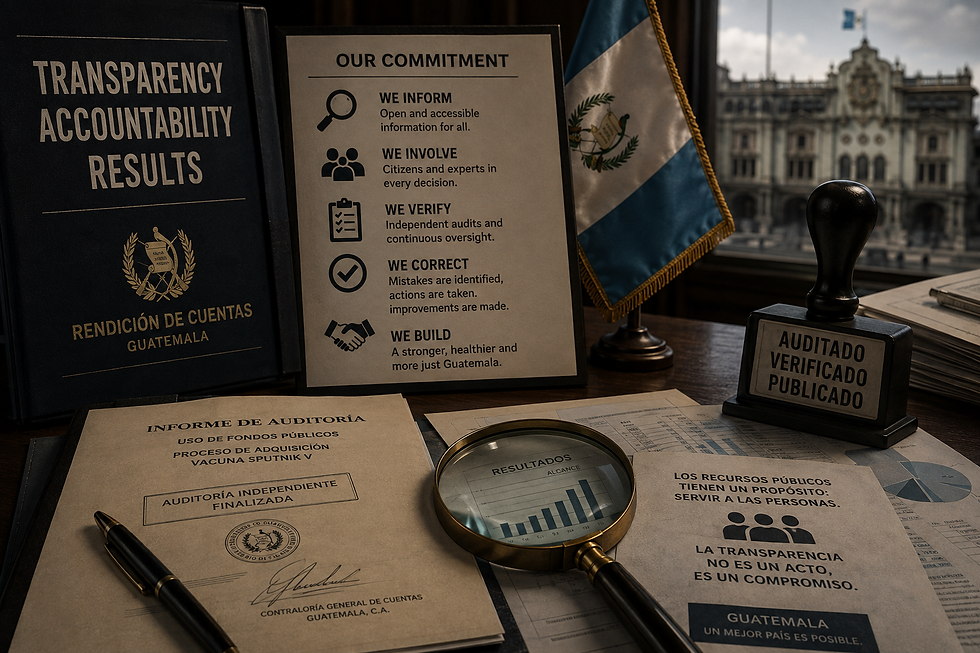
Political philosophy, constitutional law, and economics provide powerful frameworks for understanding how societies organize themselves during moments of crisis. Yet none of these disciplines alone fully addresses the moral question underlying every exercise of public authority: What responsibilities accompany power?
Throughout Scripture, authority is consistently presented not as a privilege but as a stewardship. Whether speaking of kings, judges, governors, or household servants, biblical teaching repeatedly emphasizes that authority carries accountability because it is exercised on behalf of others rather than for personal preservation. Public office therefore cannot be evaluated exclusively through efficiency or political success. It must also be evaluated through integrity, justice, prudence, and humility.
The story of Joseph in Egypt illustrates this principle with remarkable clarity. Faced with the prospect of national catastrophe, Joseph did not deny the coming famine, nor did he surrender to fear. Instead, he responded through preparation, prudent administration, transparent planning, and responsible stewardship of resources. The crisis became an opportunity to strengthen institutions rather than suspend wisdom. His leadership reminds us that foresight is not incompatible with freedom and that responsible planning need not require abandoning accountability.
Nehemiah offers a complementary example. Charged with rebuilding Jerusalem under conditions of uncertainty, he combined careful planning with public transparency, delegated responsibility without relinquishing oversight, and consistently recognized that leadership ultimately existed to serve the community rather than elevate the leader. His account illustrates that rebuilding institutions demands both technical competence and moral character.
The teachings of Jesus reinforce this same principle through the Parable of the Talents. Faithful stewardship is measured not merely by preserving what has been entrusted but by administering it wisely, responsibly, and for the benefit of others. Public resources, public authority, and public trust therefore become moral responsibilities rather than political possessions.
The Apostle Paul likewise reminds believers in Romans 13 that governing authorities possess legitimate responsibilities for maintaining order and promoting the common good. Yet the same biblical tradition repeatedly insists that rulers themselves remain accountable before God. Authority is never absolute. It exists within moral limits established by justice, truth, and human dignity. The prophets consistently challenged kings whenever political power departed from those principles, reminding successive generations that public leadership ultimately answers to standards higher than political expediency.
Perhaps no verse better captures the institutional lesson of the pandemic than Proverbs 11:14: "Where there is no guidance, a people falls, but in an abundance of counselors there is safety." Genuine counsel, however, requires more than simply accumulating expert opinions. It requires discernment; the wisdom to distinguish technical advice from political judgment, scientific evidence from administrative convenience, and temporary necessity from permanent constitutional change.
Jeremiah 33:3 offers one final reflection: "Call to me and I will answer you, and will tell you great and hidden things that you have not known." For individuals, this invitation speaks to spiritual discernment. For nations, it serves as a reminder that humility precedes wisdom. Governments that presume complete certainty become vulnerable to their own confidence. Institutions willing to examine themselves honestly, acknowledge mistakes, and continually pursue truth cultivate the resilience necessary to confront future crises without abandoning the principles upon which free societies depend.
Ultimately, the pandemic should not be remembered merely as a chapter in medical history. It should be remembered as a constitutional, institutional, economic, and moral examination of modern civilization. Whether Guatemala emerges stronger from that experience will depend less upon the virus that challenged the nation than upon the institutions, leaders, and citizens who choose to learn from it. The most enduring legacy of COVID-19 will not be found in emergency decrees or procurement contracts, but in whether those entrusted with public authority embrace stewardship over power, discernment over fear, and truth over convenience.
Epilogue: Beyond the Pandemic
History has a remarkable way of correcting certainty.
For centuries, humanity has repeatedly discovered that what once appeared unquestionable often becomes the subject of future revision. Scientific theories evolve. Governments release previously classified documents. Legislative investigations uncover institutional failures. Judicial rulings reshape public understanding. Entire generations eventually revisit events that earlier generations believed had already been settled. This process should not undermine confidence in science or democratic institutions. On the contrary, it should strengthen them. A free society distinguishes itself not by claiming infallibility, but by preserving the humility to examine its own decisions honestly when new evidence emerges.
The COVID-19 pandemic will undoubtedly remain one of the defining events of the twenty-first century. It challenged governments, healthcare systems, scientists, businesses, families, and entire nations in ways few living generations had previously experienced. Many decisions were made under extraordinary uncertainty. Some undoubtedly saved lives. Others imposed costs that only time has allowed us to measure fully. Still others continue to generate legitimate debate among researchers, policymakers, and historians. Democracies should welcome that debate rather than fear it, because truth is rarely strengthened by suppressing questions and almost always strengthened by examining them.
For Guatemala, however, the greatest lesson may have little to do with virology. It concerns the quality of the institutions we choose to build before the next crisis arrives. Pandemics, financial shocks, cyberattacks, natural disasters, geopolitical instability, and technological disruption will continue to test governments long after COVID-19 has faded into history. The resilience of a nation will depend not on its ability to predict every crisis, but on its willingness to cultivate transparent institutions, responsible leadership, constitutional safeguards, and citizens capable of exercising discernment rather than fear.
Perhaps this is ultimately the defining challenge of every republic.
Freedom without responsibility becomes disorder.
Authority without accountability becomes abuse.
Science without humility becomes dogma.
Skepticism without evidence becomes cynicism.
The future belongs to societies capable of balancing each of these principles without allowing any one of them to extinguish the others.
The pandemic reminded us that institutions matter.
It reminded us that incentives matter.
It reminded us that constitutional limits matter.
Most importantly, it reminded us that trust is among the most valuable forms of public capital any nation can possess.
Trust cannot be legislated.
It cannot be borrowed from international institutions.
It cannot be purchased through public spending.
It must be earned (patiently, consistently, and transparently) through institutions willing to tell the truth even when the truth is politically inconvenient.
As Guatemalans, we should aspire to something greater than simply preparing for the next emergency. We should aspire to build a republic whose institutions are sufficiently mature to confront future crises without sacrificing the constitutional principles that define a free society. Sovereignty is not measured by isolation, nor by unquestioning compliance with external consensus. It is measured by the confidence to cooperate internationally while preserving the wisdom to think independently, the discipline to govern responsibly, and the humility to correct course whenever evidence demands it.
History will remember COVID-19 for many reasons. Some will remember the virus. Others will remember the lockdowns, the vaccines, the economic disruptions, or the political debates. My hope is that Guatemala remembers something even more enduring: that the strength of a nation is not revealed by the absence of crises, but by the character of the institutions that emerge after those crises have passed.
Because pandemics eventually end.
Fear eventually fades.
Governments eventually change.
But the institutions we strengthen (or neglect) today will shape the freedoms our children inherit tomorrow.

Author's Reflection
The purpose of this essay is neither to rewrite history through ideology nor to diminish the suffering experienced by millions of people during the COVID-19 pandemic. Every family, healthcare professional, public servant, entrepreneur, and citizen experienced this period differently, often under extraordinary uncertainty.
Rather, this essay reflects a conviction that constitutional democracies become stronger when they possess the courage to examine their own history with honesty, humility, and intellectual rigor. Public institutions should never fear legitimate scrutiny, just as scientific inquiry should never fear responsible questioning. Both depend upon transparency, evidence, and the willingness to revise conclusions as new information becomes available.
My hope is that this work encourages readers; not toward cynicism, but toward discernment. The future of free societies will not be determined solely by how effectively they respond to the next crisis, but by whether they preserve the institutional integrity, constitutional principles, and moral responsibility that define genuine self-government.
"The measure of a nation's freedom is not how it governs during ordinary times, but how faithfully it preserves truth, liberty, and accountability when fear becomes the easiest path."
Selected Bibliography
Bastiat, Frédéric. That Which Is Seen, and That Which Is Not Seen.
Buchanan, James M. (2003). Public Choice: The Origins and Development of a Research Program. Fairfax, VA: George Mason University Press.
Friedman, Milton. Capitalism and Freedom.
Hayek, Friedrich A. The Constitution of Liberty.
House Select Subcommittee on the Coronavirus Pandemic. After Action Review of the COVID-19 Pandemic: The Lessons Learned and a Path Forward. U.S. House of Representatives, December 2024.
Popper, Karl R. The Logic of Scientific Discovery.
Sowell, Thomas. Applied Economics: Thinking Beyond Stage One.
U.S. House of Representatives. House Select Subcommittee on the Coronavirus Pandemic. After Action Review of the COVID-19 Pandemic: The Lessons Learned and a Path Forward. Final Report, December 4, 2024.
Disclaimer: This essay reflects the author's analysis based on publicly available information, official reports, and historical documentation available at the time of writing. Scientific knowledge, public policy, and historical interpretation continue to evolve as additional evidence emerges.


Comments