


The Memory We Inherit

Updated: Aug 22

Editorial Note
This text begins with a question that belongs equally to history and philosophy: how much of who we are began before us? It does not seek to turn lineage into destiny, nor genealogy into an absolute explanation of personality, vocation, or spiritual life. Nor does it attempt to idealize those who came before us, as though the past were made only of heroes, great achievements, and names worthy of remembrance. A real family history is usually more complex. It is shaped by greatness and contradiction, service and selfishness, acts of love and decisions that left wounds, generations capable of building a great deal and others that may have given their descendants little more than the right to exist.
Throughout these pages, history, biography, science, family memory, philosophy, and theology are woven together in order to explore the different ways in which one generation can leave an imprint on those that follow. Some of those imprints travel through genetics; others through culture, education, words, silences, family structures, unresolved wounds, behavioral models, the institutions people build, and the stories a family chooses to preserve. Research on genetic and non-genetic inheritance makes it possible to see that a life does not begin entirely from zero. We receive a body, but we also receive a world that has already been interpreted by those who came before us.
Recognizing this continuity, however, does not mean submitting ourselves to it.
Genealogy may explain part of our starting point, but it should never become a prison. Knowing our ancestors can help us understand why certain subjects attract us, why certain wounds recur, or why particular capacities, fears, vocations, and sensitivities seem to appear; none of those observations, however, eliminates our moral freedom. For that reason, this biographical and genealogical essay is not merely an investigation of the past. It is a reflection on the responsibility a person acquires once he begins to understand what he has received.
Family memory thus becomes a form of discernment. It forces us to recognize that even people who left behind great works could make serious mistakes, and that those who failed in almost everything may nonetheless have made our existence possible. That paradox belongs to the human condition. No person should be reduced solely to his finest act or condemned entirely by his worst one. Every generation contains light and shadow that the next generation must learn to distinguish.
Above all, this work begins from a Christ-centered conviction: our family origins can help us understand who we are, but they do not constitute our ultimate identity. Genealogy deserves remembrance, history deserves truth, and our ancestors deserve fair recognition for what they contributed; but absolute honor belongs to God. The purpose of looking backward is not to become fascinated with bloodline, surname, titles, property, or achievement, but to understand more clearly what we are called to do with the life we have received.
This biographical and genealogical essay therefore does not propose the veneration of lineage. It proposes something more demanding: to know it, give thanks for it, discern it, and transform it.
To preserve what gave life, interrupt what produced destruction, learn from success without turning it into pride, learn from failure without turning it into resentment, and understand that every generation receives the opportunity to become a turning point within a story far older than itself.
Lineage, Extended Inheritance, Generational Wounds, and the Call to Transform a Story
There are families whose history can be reconstructed with relative ease: an orderly succession of birth certificates, marriages, old photographs, properties, and surnames passed from one generation to the next without major disruption. Others, however, seem to have left their memory scattered across countries, revolutions, judicial archives, airports, military barracks, major infrastructure projects, vanished estates, changes of identity, migrations, wounds, silences, and stories that survived precisely because someone took the time to tell them while there were still people alive who could remember. My family clearly belongs to this second category. When I began to investigate seriously where I came from, I discovered that some of the things I had long considered simply part of my personality seemed, with surprising persistence, to resonate with stories that had begun long before I was born.
For much of my life I have felt drawn, simultaneously, to worlds that at first glance may seem to have little in common: mountains and physical endurance, law and politics, building companies, technology, infrastructure, spiritual searching, the investigation of phenomena we still do not fully understand, and above all an almost visceral need to do something that transcends my own existence. Learning about my genealogy has not led me to believe that everything is predetermined by blood. On the contrary, it has brought me to a far more interesting question: how much of what we call vocation is actually formed within a current that began generations before us?
Erwin Schrödinger formulated in What Is Life? an intuition extraordinarily ahead of its time. Long before the structure of DNA was known, he imagined that hereditary material had to function as a highly stable structure and, at the same time, be sufficiently complex to contain a kind of code. He called it an “aperiodic crystal” and spoke of a code-script, a coded script capable of preserving information and actively participating in the construction of the organism. For Schrödinger, what we inherit biologically was not inert matter but organized information; in his metaphor, the chromosome functioned at once as the architect’s blueprint and as the builder’s capacity to execute it.
Contemporary biology has greatly expanded that intuition. We now know that genetics is fundamental, but we also know that human beings receive far more from previous generations than DNA alone. The essay on non-genetic inheritance that accompanies this investigation brings together perspectives from evolutionary biology, cultural anthropology, and family psychology to explain how certain traits may be transmitted through parental effects, epigenetic mechanisms, social learning, language, culture, shared environments, and symbols. Not everything that can be inherited is necessarily a genetic sequence; there are vertical, horizontal, and oblique systems of transmission through which a way of understanding the world can survive even after those who originated it have died. Culture itself can be transmitted among people who are not biologically related and can accumulate knowledge across generations at a speed impossible for genetic evolution alone.
This distinction is essential for understanding the story that follows. I do not mean to claim that a vocation for building airports, practicing law, serving in the military, climbing mountains, or undergoing spiritual experiences is literally written into a chromosome. Nor do I intend to turn epigenetics into a universal explanation for every human phenomenon. What I want to explore is something deeper and at the same time more cautious: a family can transmit behavioral patterns, ways of confronting risk, conceptions of power, understandings of work, unresolved wounds, silences, ambitions, beliefs, and even questions that a later generation may eventually experience as its own.
Those Who Were Building Before I Was Born
One of the central figures in this story is the engineer Dagoberto Flores Calderón, known within his family as PapáDago. The family biography Los andares de don Dagoberto, PapáDago places his birth in Zacatecas on November 13, 1913, in the midst of the Mexican Revolution, as the son of the military officer Ignacio Flores Palafox and Trinidad Calderón Agüero. The pages preserved by the family describe a household shaped by military life, the Revolution, and constant mobility, all of which would contribute to Dagoberto’s particularly adaptable temperament. His father had been an artillery officer, and family memory places him within different episodes of Mexico’s turbulent revolutionary era. Dagoberto therefore grew up in a home where the army, politics, technical knowledge, and survival were not abstract ideas but part of everyday life.
Over time, Dagoberto followed a path different from that of arms, although not entirely removed from the logic of planning and construction that surrounded military life. He trained as an engineer and eventually entered one of the most strategic fields in the modernization of mid-twentieth-century Mexico: aeronautics and airport infrastructure. His own biography recounts how, during the political transition that brought Miguel Alemán to the Presidency, Dagoberto understood that aviation was about to change radically. The older propeller aircraft would gradually give way to faster and heavier airplanes with far greater requirements in runways, aprons, communications, and terminals. Mexico needed a new generation of airports and, above all, technicians capable of understanding them.

Dagoberto specialized in the United States and later worked within the Mexican governmental structure responsible for aeronautics. His family biography places him in the Directorate of Aeronautics of the Ministry of Communications and Public Works during Miguel Alemán’s administration. From there he entered a career that would take him far beyond Mexico. Airports, construction, urban planning studies, international travel, and projects connected with multilateral organizations eventually became the backbone of his professional life.
In Mexico City he left an important mark on airport modernization. The capital’s airport, which over the years would become the present-day Mexico City International Airport, required a profound transformation in order to respond to the emerging age of aviation. Family history places Dagoberto within that modernization process and helps explain why his specialization later made him a valuable technical expert for international work.
Then came Guatemala.
La Aurora, the United Nations, and a Guatemala in Crisis
Dagoberto’s Guatemalan period is especially important because for many years it remained reduced to family memories that were difficult to confirm through a superficial internet search. Yet PapáDago provides a narrative precise enough to reconstruct the context. Dagoberto arrived in Guatemala as a technical expert connected to the United Nations, working directly on the capital’s airport problem. The book recounts that he studied Guatemala’s topography and urban development and concluded that La Aurora, increasingly enclosed by the city’s growth, was not the ideal long-term solution for the coming generation of jet aircraft. His technical proposal was to build a new airport in another area rather than continue expanding La Aurora.
The proposal did not prevail. The book itself attributes its failure to a combination of territorial, economic, and political interests. Dagoberto ultimately worked on the infrastructure that remained: La Aurora.

There is also a material memory within the family that has acquired increasing importance with time. In the old airport there was a plaque bearing his name. That plaque disappeared during later renovations, but historical photographs of the old building still make it possible to identify the area where it was located, on the concrete base of the former terminal. To someone born decades later, a plaque may seem like a minor detail; within genealogy, however, it can become one of those small physical pieces that confirm that a story transmitted orally had a real foundation.

The historical moment in which Dagoberto was working in Guatemala was anything but ordinary. The country was caught in a growing confrontation that culminated in the overthrow of Jacobo Árbenz in 1954, as part of the covert United States operation known as PBSUCCESS. The intervention included diplomatic pressure, the organization of opposition forces, psychological operations, propaganda, air support, and an invasion from Honduras led by Carlos Castillo Armas. Eastern Guatemala, especially Zacapa, Chiquimula, and Puerto Barrios, became strategically important.
Dagoberto’s own book expressly mentions the political tension, the rise of Castillo Armas, and United States support, including references to the CIA. This makes it possible to say that the family was fully aware of the political context in which it was living. It does not allow us to claim, and it would be intellectually irresponsible to do so, that Dagoberto was a CIA agent or that he had been sent specifically to participate in PBSUCCESS. What can be sustained is something historically far more interesting: a Mexican engineer specialized in airport infrastructure, trained within the technical apparatus of the Mexican state and later linked to the United Nations, was working on one of Guatemala’s most strategic pieces of infrastructure precisely during the period when the country stood at the center of one of the most significant operations of the Latin American Cold War.

Family history often exists precisely in these gray areas where document, memory, and context touch without fully explaining one another. Knowing the past requires learning to live with that uncertainty without inventing what we still do not know.
Marta and the Part of the Story Genetics Still Has to Confirm
Within this same history appears Tina Olvera, who would eventually become one of Dagoberto’s wives. But before Dagoberto there was already Marta, born in Mexico City in 1946.
Here it is important to be extremely precise, because different levels of evidence are involved.
Within the family, it has long been known and transmitted that Marta was the biological daughter of Lázaro Cárdenas del Río. This information did not arise recently from photographs or from a contemporary genealogical search. It forms part of the knowledge transmitted within the family. To date, however, there has been no comparative genetic test capable of scientifically confirming that filiation. The correct way to present it is therefore this: for the family, Lázaro Cárdenas’s paternity is a known and transmitted fact; for an external genealogical investigation, it remains pending validation through DNA.
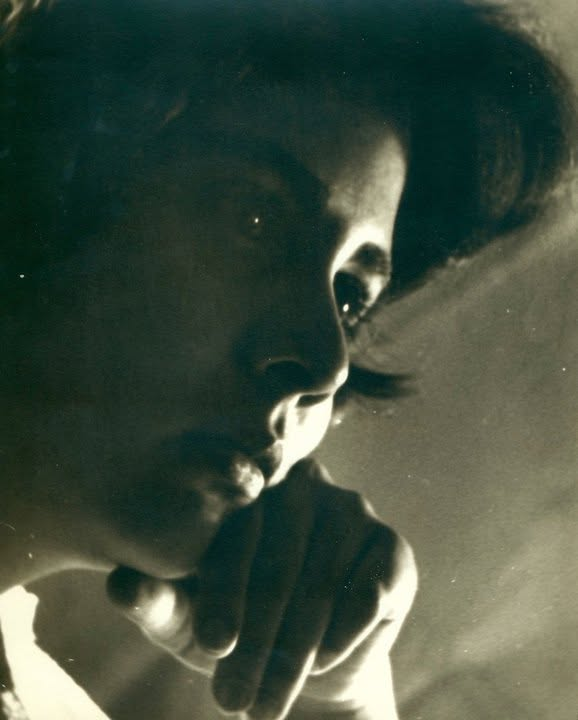
There is, however, an independent piece of evidence within Dagoberto’s own book that is particularly important: Marta already appears as Tina’s daughter when Tina enters Dagoberto’s life. The narrative does not present Marta as the engineer’s biological daughter. On the contrary, it describes how both sides of that new marriage brought children from previous relationships. Tina brought Marta; Dagoberto brought children he already had from his own prior relationships. Marta’s biological history therefore begins before the Flores Olvera family.
There is also an important fact within the family history: Marta originally bore the surname Cárdenas before she was later incorporated into the family of Dagoberto Flores Calderón. This becomes particularly significant because Los andares de Don Dagoberto, PapáDago explicitly acknowledges that Dagoberto changed surnames and even certain documents of children who became part of his different marriages, adapting them to the new family structure. In Marta’s case, this helps explain how she could have moved from an identity originally connected to the Cárdenas surname to a later documentary identity within the Flores Calderón family.
For that reason, there should be, or at some point should have been, an earlier record of Marta under the surname Cárdenas in Mexico, whether in civil, school, parish, municipal, or administrative records corresponding to her birth or early childhood. Locating that documentation is one of the most important lines of this investigation, not because the family is uncertain about her original surname, but because finding such a record would documentarily corroborate for third parties a fact that is already known within the family.
Marta’s childhood memory adds another element that deserves to be preserved without exaggeration. Before joining Dagoberto’s household, she remembered having lived in a large mansion in Mexico City with numerous household staff. Within family knowledge, that period belongs to the context before Dagoberto and is connected with the story of her biological father, Lázaro Cárdenas. The property has not yet been identified through documentation, and it would therefore be incorrect to turn it arbitrarily into Los Pinos or any other specific residence. The memory nevertheless exists and should remain in the narrative exactly as that: the direct memory of a child who would later live within an entirely different family reality.
Another detail that helps geographically situate this period of her childhood concerns her education. Martha’s siblings told me directly that she attended Colegio Williams in the San Rafael neighborhood, located at Sadi Carnot 33 in Mexico City. Based on that testimony, I personally visited the school in an attempt to locate academic records or documentation that might have survived from those years. However, because of the amount of time that had passed, I was informed that records dating back that far were no longer available. The current absence of those documents means that the school cannot yet serve as independent archival confirmation, but the testimony of her siblings provides a concrete family reference and, together with the institution’s location, helps place part of Martha’s childhood more precisely in Mexico City before she became part of Dagoberto Flores Calderón’s family.

Tina’s genealogy also includes a much older family tradition according to which she descended from Pedro Romero de Terreros, a figure associated with one of the great fortunes of New Spain. That history belongs to a different period and should not be confused with Tina’s immediate economic circumstances in the 1940s. According to the transmitted family tradition, the family had already suffered a major patrimonial loss: after the death of Tina’s parents, properties were left under the administration of an executor and were eventually lost in processes associated with expropriation and transformations in land ownership. The Romero de Terreros connection must therefore be regarded, for now, as a family genealogical tradition still awaiting documentary reconstruction generation by generation, rather than as the explanation for the mansion Marta remembered.
This distinction matters because the story becomes stronger precisely when we do not force all of its pieces to fit before their time.
The Man Who Turned Sovereignty into Infrastructure
If Marta’s family history places Lázaro Cárdenas del Río within the biological family tree, his significance cannot be reduced merely to his role as President of Mexico from 1934 to 1940. Cárdenas represented one of the most ambitious attempts in twentieth-century Mexico to transform political sovereignty into material capacity.

The best-known episode is the 1938 oil expropriation. The decision to place petroleum resources and the infrastructure of foreign companies under Mexican control ultimately led to the development of PEMEX, which for decades became one of the central symbols of Mexican economic nationalism. It was not merely a corporate dispute. In the Cardenista vision, control of oil meant control of energy, revenue, industrial capacity, and autonomy from foreign interests.
But the project was much broader. Cárdenas also promoted technical education and the training of engineers capable of administering that new sovereignty. During his administration the Instituto Politécnico Nacional was created, precisely with the purpose of preparing technicians, scientists, and engineers who could develop the nation’s resources without remaining permanently dependent on imported knowledge.
In rural Mexico, agrarian reform reached an unprecedented scale. Millions of hectares were redistributed and the ejido system became a fundamental component of Cardenista Mexico. The policy had enormous social and economic consequences, both positive and controversial, but it responded to a clear idea: the Revolution could not be limited to changing presidents; it had to transform the material structure of the country.
The same philosophy can be seen in major hydraulic works. The Lázaro Cárdenas Dam, known as El Palmito, became one of the great symbols of Mexico’s transition toward modern hydraulic engineering. Begun in 1936 by the National Irrigation Commission on the Nazas River, the project formed part of a new era in which Mexico began adopting modern technical methods and treating water as strategic infrastructure for agriculture, regional development, and economic sovereignty. Together with other major hydraulic interventions, the project helped inaugurate an era in which engineering ceased to be understood merely as physical construction and increasingly became an instrument of national policy.

Railways, irrigation, petroleum, technical education, agrarian reform, and infrastructure were not isolated projects. They formed part of a single conception of the state.
Cárdenas also possessed a humanitarian dimension that is often overshadowed by his economic reforms. Mexico opened its doors to thousands of Spanish Republicans fleeing the Civil War and the advance of Francoism. Among them were the Children of Morelia, minors who were received and protected in Mexico. That episode reveals another dimension of Cardenismo: national sovereignty was not understood solely as defense against foreign powers, but also as the capacity to use the state to protect those who had lost their own homeland.
Was Lázaro Cárdenas Christ-centered? The historically responsible answer is that there is not enough evidence to say so. He was a Freemason, a secularist, and deeply formed within Mexico’s revolutionary tradition. His political thought cannot be presented as a conscious application of the Gospel. Some of his actions, however, can be read retrospectively from a Christian perspective as paralleling profoundly biblical principles: protecting the poor, welcoming the foreigner, limiting abuses of economic power, expanding education, and building infrastructure for generations not yet born. Moral affinity should not be confused with a theological identity the sources do not establish.
Importantly, Cárdenas’s secularism did not prevent him from helping to de-escalate the severe Church-State conflict inherited from the Calles era. Under Plutarco Elías Calles, anticlerical enforcement had included the closure of churches, restrictions on priests, the suspension of public worship, and other measures that contributed to the Cristero War. During Cárdenas’s presidency, especially from 1936 onward, the federal government shifted toward a more conciliatory approach: the most aggressive antireligious campaigns were reduced, relations with the Catholic hierarchy improved, and public Catholic worship was able to recover progressively in places where it had previously been heavily restricted or suspended. In that sense, although Cárdenas himself should not be portrayed as a Catholic or Christ-centered political leader, his government helped create the conditions in which Catholic religious life and the celebration of Mass could normalize again after the harshest phase of post-revolutionary persecution. This apparent contradiction is itself historically significant: a secular revolutionary leader could disagree profoundly with the Church as an institution while still recognizing that prolonged religious persecution was socially destructive and that coexistence was preferable to continued confrontation.
On Freemasonry and the Need for Discernment
Freemasonry cannot seriously be reduced to a satanic practice. Historically, it developed as a symbolic and philosophical fraternity inspired in part by older traditions of builders and stonemasons, emphasizing discipline, fraternity, moral development, service, and the use of symbolic tools as instruments of personal formation. Some Masonic currents later incorporated Templar references, although a direct and uninterrupted historical continuity between the medieval Knights Templar and modern Freemasonry has not been demonstrated. The Catholic Church has maintained a critical position toward Freemasonry for centuries because it considers certain Masonic principles incompatible with Christian doctrine, but that institutional incompatibility does not mean that every Mason is anti-Christian or that every lodge practices occultism. There are Masons who are personally Christ-centered and others who are not, just as within Christian communities one may encounter people deeply centered on Christ as well as others who, despite using religious language, engage in practices, abuses, or behaviors contrary to the Gospel. The history of the Church itself also shows that human institutions can make serious mistakes, pass through periods of persecution or polarization, and later reconsider certain decisions; the contemporary debate over preserving the Latin liturgical tradition, including Pope Leo XIV’s recent signs of openness toward communities attached to the Vetus Ordo, is one example of how tradition and reform remain living questions within the Church. Latin also retains a particular historical and spiritual importance in Western liturgy and in the Roman tradition of exorcism, although its authority should not be understood as some magical power inherent in the language itself, but rather within the authority of Christ and the prayer of the Church. For that reason, the principle I adopt throughout this essay is the same whether I am considering a church, a lodge, or any other institution: do not judge solely by the label, but discern people by their convictions, their actions, and their fruits. This subject deserves a separate historical and theological analysis, which I intend to explore in greater depth in another essay.
Law as Another Form of Infrastructure
In Guatemala, another family branch seems to have expressed the same impulse toward construction, but through a different instrument.
Attorney Baudilio Jordán, husband of Alicia Cárcamo, developed a legal career linked to the judicial system and institutional life of Guatemala during much of the first half of the twentieth century. His name appears in judicial documentation associated with litigation, extraordinary appeals, and functions within the judiciary. He also appears connected to institutional representation in eastern Guatemala.
The work of a jurist does not produce a runway or a dam that can be photographed from the air, but it builds another kind of infrastructure: institutions.
A society needs roads and energy, but it also needs procedures, rights, judges, contracts, and mechanisms capable of resolving conflict without permanent recourse to force. Baudilio pursued his career precisely within a Guatemala that passed through authoritarian governments, constitutional reforms, revolutions, and ultimately the crisis of 1954.
The geographical coincidence is particularly interesting. His professional activity was linked to eastern Guatemala, the region that in June 1954 would become one of the principal theaters of Castillo Armas’s invasion. There is no evidence that would place Baudilio as a participant in PBSUCCESS, and it would be incorrect to turn geographical proximity into political participation. His importance within this narrative lies elsewhere: while one generation observed the country’s geopolitical transformation from the world of airports, another remained within the legal structures charged with preserving some form of institutional continuity amid those changes.
Colonel Fernando Rivas Jovel and the Discipline of Another Frontier
From El Salvador emerges a third expression of the same family energy: the military world.
Colonel Fernando Rivas Jovel, originally from Sonsonate and married to Berta Linares, belonged to a generation of Salvadoran officers formed during the first half of the twentieth century. The sources located thus far make it possible to follow a Fernando Rivas from the rank of captain into higher command positions, including the Cavalry Regiment, the 1st Infantry Regiment, and later diplomatic-military functions as a military attaché in Costa Rica.
Family tradition also holds that he was connected with the Rosicrucians. To date, that connection has not been independently corroborated through documentation and therefore must remain separate from the military career that does find echoes in historical sources.
His place in this story matters because the same cluster of values appears again, expressed differently across several family branches: discipline, structure, leadership, strategy, and service within institutions. In Dagoberto, those qualities were expressed through engineering; in Baudilio, through law; in Fernando, through the military.
Perhaps family vocations are not inherited as identical professions. Perhaps they are inherited as ways of relating to the world.
Tina and the Memory of a Lost Fortune
Tina’s story introduces another recurring theme: property and its loss.
Family tradition holds that her ancestry extended, several generations back, to the family of Pedro Romero de Terreros. This belongs to an older genealogical memory that still requires documentary reconstruction. Even within the family account, however, by Tina’s time that great fortune belonged far more to the past than to the present. After the death of her parents, patrimonial administration was left in the hands of an executor, and the family eventually lost important properties amid processes of transformation and land expropriation.
This story does not explain the mansion Marta remembered from her early childhood. They are two different episodes.
What it does introduce is a remarkably persistent pattern that appears again in later generations: patrimony, loss, inheritance disputes, and the subsequent need to build again.
A family that has experienced major economic losses can transmit, even without consciously speaking about them, a particular relationship with financial security. It can produce generations that save obsessively, others that take extreme risks in order to rebuild what they believe was lost, others that develop distrust toward institutions, and still others that turn the creation of patrimony into a symbolic form of repairing the past.
None of that needs to be written in DNA in order to be transmitted.
What We Inherit Without Knowing We Inherited It

The essay on non-genetic inheritance is particularly useful here because it distinguishes among different channels of transmission. Biological inheritance exists, but so does social learning, through which we observe behavior and incorporate it; cultural transmission can move from parents to children, among contemporaries, or from adults of one generation to young people who are not necessarily their direct descendants; parental effects and epigenetic mechanisms can also modify the way certain biological systems respond to the environment.
This means that a person can resemble profoundly an ancestor he never knew without having to imagine a literal biographical memory stored in his genes.
The decisions of that ancestor may have determined the country in which his children lived; that country determined the educational institutions available to them; those institutions shaped professions; those professions created social networks; those networks affected marriages and migrations; and those marriages created households in which particular ways of speaking, loving, competing, spending money, resolving conflict, and understanding power were transmitted.
A decision made in 1938 can, through such a chain, psychologically affect someone born eighty years later.
That too is inheritance.
The Wounds That Travel Alongside Achievement
It would be easy to write a romantic genealogy by selecting only distinguished ancestors, great works, public positions, and stories that inspire pride. But a genealogy used to understand one’s life honestly must also look at what hurt.
The document Historia Familiar begins precisely by describing a rupture that had already stretched across generations and a prayer pronounced at birth: that this new life might serve to break generational chains. In that same context, Jeremiah 29:11 appears as a verse associated with life purpose, a passage that years later unexpectedly reappeared during a journey and thereby reinforced its importance within the author’s personal spiritual interpretation.
The later history contains marital conflict, abandonment, economic tensions, property disputes, illness, traumatic family episodes, and experiences that some family members have interpreted spiritually. In a public version of this history, living people connected to those events must remain anonymous. Their identities are unnecessary for understanding the phenomenon; revealing them would risk transferring into a new generation the same dynamic of confrontation that the work itself seeks to overcome.
What matters is the pattern.
Across several generations appear blended families, paternal figures replaced by others, children raised within complex family structures, conflict surrounding money, secrets, estrangements, and incomplete reconciliations.
The text on non-genetic inheritance draws on the work of Mark Wolynn and other authors who study precisely how certain family patterns may appear repeatedly in later generations. Among the dynamics described are excessive identification with a parent, exclusion of a parental figure, early rupture of attachment, and emotional identification with relatives who experienced traumatic outcomes.
This does not mean that every illness, accident, or tragedy can be explained as the consequence of ancestral trauma.
But there is a much simpler reality that is difficult to deny: trauma teaches when no one heals it.
A child learns how to argue by watching arguments. He learns how people abandon by seeing abandonment. He learns how money is handled by watching fear, generosity, or control. He learns how success is received by observing celebration or resentment. He learns what love means by watching how those around him love.
And eventually he may repeat those things even after promising himself that he never would.
For that reason, knowing genealogy is not merely a matter of knowing who one’s great-grandfather was. It is a matter of discovering which family scripts we continue to perform without knowing who wrote them.
The Point Where Science Must Stop
Here too it is necessary to preserve a boundary that gives credibility to the entire investigation.
Schrödinger did not teach that our ancestors’ memories were stored in DNA. Nor did he explain spiritual phenomena through quantum physics. His purpose was to understand how an organism could preserve extraordinary order and transmit biological information reliably. His metaphor of the code was visionary precisely because it anticipated the need for a molecular structure capable of storing instructions.
Epigenetics likewise does not demonstrate that a mystical vision, a capacity for discernment, or an extraordinary state of consciousness can be inherited.
Therefore, when this story enters metaphysical territory, it must do so in another language: not the language of scientific proof, but that of testimony, philosophy, and theology.
Personal Introduction
Before entering into the experiences that transformed the way I understand faith, consciousness, and purpose, there is an event I consider necessary to mention because, in retrospect, it marked the beginning of a process far longer than I could have imagined at the time. Marta, who was like a second mother to me, passed away in November 2010 after a battle with cancer. Her death represented a profound rupture in my life, and in the midst of that moment I made a very simple prayer: I asked God to give me wisdom.

At that moment, I did not understand what I was truly asking for. I thought of wisdom as clarity, knowledge, or the ability to make better decisions, but over the years I came to understand that wisdom often arrives not only through answers, but also through experiences that force us to develop judgment. What followed was a kind of personal roller coaster in which I went through situations that, at the time, were far from pleasant: family separations, experiences involving corruption and injustice, deception, betrayals by people who had once been very close to me, decisions I made out of naivety, and circumstances that forced me to question many of the certainties with which I had entered adult life.
Today, I do not believe that every painful event was necessarily sent by God, nor that suffering should be romanticized as an indispensable requirement for growth. I do believe, however, that a person can decide what to do with what happens to them. Some experiences showed me directly how trust behaves when it is tested, how power and interests operate when principles disappear, how an apparently small decision can have major consequences, and, above all, how much can be learned when one stops treating failure only as a source of frustration and begins to study it as information.
Over time, I began to understand that prayer from 2010 differently. I had asked for wisdom, but I did not yet understand that wisdom requires discernment, and discernment is usually developed when a person has to learn to distinguish between appearance and reality, loyalty and self-interest, conviction and pride, trust and naivety, justice and convenience. Many of the situations that I initially interpreted only as losses or difficulties eventually became lessons that changed the way I make decisions, understand people, and recognize my own mistakes.
The Moment I Understood Where to Seek True Support
There came a moment, approximately two years before writing these pages, when that search for wisdom ceased to be an abstract reflection and became entirely practical. I went through a particularly difficult situation involving one of my businesses and, for the first time in a long while, found myself facing a problem that I had to resolve without automatically seeking a paternal figure to rescue me and without placing an additional burden on my mother. She had already fought enough battles of her own, battles for others, and even unnecessary battles throughout her life, and precisely because I deeply admire her ability to fight, I understood that I could not turn her strength into a permanent obligation to solve my difficulties as well.

That sense of exposure was not entirely new. Years earlier, I had experienced something similar surrounding the violent death of my grandfather and the inheritance dispute that followed. Within my family, it was maintained that his death was related to the deliberate administration of insulin by someone close to him, and serious disputes later arose concerning his inheritance, documents, signatures, and assets. Family members also raised allegations of possible irregularities and improper conduct by different individuals and institutions involved in the proceedings that followed. Given the seriousness of these claims, and because some of the people connected to those events may still be alive, it would not be appropriate to turn this essay into a parallel trial or to present as judicially established facts matters that would require independent case files, expert examinations, and rulings to establish. What matters for this reflection is the effect that experience had on me: for years I watched how a family conflict could become intertwined with money, interests, loyalties, institutions, and relationships I had believed to be solid, and that progressively hardened the way I trusted others.
Over time, I understood that this had left a consequence deeper than the inheritance conflict itself. I had begun to assume that, in the face of a real crisis, I needed to be prepared to solve everything alone because any human figure in whom I placed too much reliance could eventually disappoint me. That idea could look like strength, but it also concealed a form of defensive self-sufficiency. The problem I later faced in my business ultimately exposed that limit. There was a moment when I genuinely needed what, for years, I had associated with the support of a father figure: guidance, security, companionship, and the reassurance of knowing that someone could help me carry part of the weight. When I did not find it in the way I had expected, I had to confront a much deeper question about where I was ultimately placing my sense of security.
It was then that that simple prayer took on another dimension. I began to understand that mothers and fathers, however important they may be in our lives, are still human beings. My mother is someone I deeply admire precisely because I have seen her face extraordinarily difficult situations (such as looking after her 2 siblings while in parallel working and teaching hard to bring us all forward together with our grandmother), but admiring her does not mean demanding perfection from her or making her the absolute source of my security. The same happened with my understanding of fatherhood. Different father figures, or people who symbolically occupied that role at different stages of my life, eventually revealed their own limitations as well, and some relationships that I had regarded for years as examples of trust ultimately went through disappointment and betrayal. With time, I understood that expecting human perfection from any father, mother, mentor, or close person places upon them a responsibility that was never theirs to bear.

That understanding also allowed me to begin healing my relationship with my own father from a different position. Not because every difficulty disappeared, nor because the past had to be artificially reinterpreted, but because I stopped demanding from an earthly relationship what, through my faith, I can only expect absolutely from God. Reconciliation began when I was able to distinguish between loving a person and requiring that person to occupy the place of God. That distinction allowed me to recognize humanity where I had previously seen mostly absence or disappointment, while also preserving the boundaries necessary so that forgiveness would not be confused with the repetition of harmful patterns.

From my Christian understanding, a much more important certainty began to take shape there: when I seek truly unconditional support, my ultimate reference cannot rest in any human relationship, but in God, in Christ, in discernment through the guidance of the Holy Spirit, and in the intercession of the Virgin Mary. This does not diminish the value of a mother, a father, a family, a friend, or a mentor; it places them in their proper order. I can love them deeply, be grateful for what they have given me, recognize what they could not give me, and understand that none of them was meant to occupy the absolute place that belongs to God.
I also began to understand in a more personal way the Christian tradition concerning spiritual protection. Scripture and the tradition of the Church speak of angels sent by God to serve, protect, and accompany, and Christian devotion has recognized for centuries the figure of the guardian angel. For me, this dimension acquired particular significance during the events that followed. I do not interpret it as permission to turn every coincidence into a supernatural sign, but rather as part of a spiritual understanding in which one may ask God for protection for oneself and for those one loves, trust in Christ, turn to Mary’s intercession, and recognize the possibility of a providence that transcends what we can directly control.

This learning also corrected an erroneous idea of strength that I had developed. Being strong does not mean needing no one, solving absolutely everything alone, or hardening oneself until becoming immune to disappointment. True strength requires knowing where to place one’s trust, recognizing the limitations of others, establishing one’s own boundaries when necessary, and accepting that some situations exceed our individual capacity. I then understood that part of breaking chains also meant ceasing to demand impossible perfection from human relationships while, at the same time, refusing to use their imperfections as a reason to close my heart.
For that reason, the business crisis ended up having a consequence I could not have imagined at the time. It forced me to revisit wounds that had begun much earlier, to recognize how deeply what happened around my grandfather had influenced me, to view my paternal and family relationships differently, and, ultimately, to understand that the security I had sought for years in structures, people, assets, or control needed a deeper foundation. I did not arrive at that conclusion by withdrawing from the world or rejecting human bonds. I found it by learning to order them: God first, principles next, and from there, family, relationships, and human responsibilities in the place where they truly belong.
In that sense, I found a particular resonance with the biblical figure of Solomon. When Solomon asked God for wisdom, he did not simply receive a collection of correct answers for every future circumstance. His own story demonstrates that possessing wisdom does not automatically eliminate the possibility of error. He had to govern, confront conflicts, administer power, experience the consequences of his own decisions, and discover that even a person renowned for wisdom can lose perspective when discernment ceases to be exercised. For me, that dimension of his story became especially important: wisdom does not consist in reaching a condition in which one no longer makes mistakes, but in acquiring the ability to recognize them, understand their consequences, and correct course before being defined by them.
Years later, I understood that many of the experiences I had lived through since Marta’s death could be viewed through that same logic. Family separation taught me that family is not abandoned, even when some relatives do choose to abandon, fail, or act in ways contrary to what should sustain a family bond. But it also taught me that loving one’s family does not mean accepting every behavior, tolerating destructive dynamics, or allowing kinship to become an excuse for perpetuating what causes harm. I learned that boundaries can be a form of responsible love and, at times, a necessary condition for breaking chains that would otherwise continue repeating from generation to generation.
I also understood that, above family bonds, must stand the principles of God and of Christ. Blood cannot become a moral authority superior to truth, justice, responsibility, or what is good. Honoring family does not mean blindly obeying its patterns or protecting what is wrong simply because it comes from someone close to us. Sometimes, the healthiest way to preserve love without feeding toxicity is precisely to establish distance, clear boundaries, and a relationship ordered by principles rather than by guilt, fear, or emotional dependency.
That lesson changed the way I understand what it means to break chains. It is not about destroying relationships out of resentment or turning family wounds into a permanent identity, but about refusing to continue patterns that contradict what one recognizes as true and good. Forgiveness does not require allowing the same harm again; love does not require abandoning discernment; and belonging to a family does not mean that we must sacrifice the principles of Christ in order to preserve the appearance of unity. Sometimes, precisely because family matters, boundaries are necessary so that what deserves to continue can survive without continuing to nourish what must end.
Injustice led me to study more deeply the structures that enable or limit abuse; corruption showed me the importance of strong institutions; betrayal taught me to distinguish closeness from genuine loyalty; and my own naive mistakes forced me to accept something perhaps even more important: good intentions are not enough to make good decisions. Intention requires knowledge, prudence, humility, and the capacity to listen.
That also changed my relationship with the concept of suffering. I stopped interpreting it solely as something to be avoided or as evidence that a stage of life had gone wrong. Nor did I go to the opposite extreme of considering it inherently virtuous. I began to see it as a human reality that, when it inevitably appears, can become raw material for developing character and understanding. A difficulty does not automatically contain a lesson; we are the ones who must extract it. And when we manage to do so, what might have diminished us can instead expand our capacity to understand.
For that reason, when I look back today at the prayer I made after Marta’s death, I find an irony that would have been impossible for me to understand then. I asked for wisdom, probably expecting greater clarity, but the road toward it first required me to recognize how much I did not know. I had to make mistakes, trust the wrong people, experience disappointment, go through situations of injustice, and observe up close human dynamics that I had previously known only in theory. Not all those experiences were necessary, nor were all of them right, but once they had happened, there was one decision that did depend on me: whether to allow them to make me more resentful or to allow them to make me more aware.
Over time, I chose the second possibility.
And it was precisely after years of going through that process that, in June 2025, I made another simple prayer. This time I did not ask for wisdom in general terms. I asked God to forgive me for my naivety, for the mistakes I had made in the process of building businesses, and for those decisions in which I had confused conviction with certainty. Then I asked for something much more specific: that He illuminate me and allow me to understand more clearly what, until then, I had not known how to see.
What happened next would open an entirely different stage of my life.
When Lineage Leads to a Question About God
In June 2025, after a simple prayer in which I asked God to forgive me for my naivety, for the mistakes I had made throughout my entrepreneurial journey, and for those decisions in which I had confused conviction with certainty, I asked for something much more specific: that He illuminate me and allow me to understand more clearly what, until then, I had not known how to see. Shortly afterward, I had an experience that, from my own perception, took the form of a state of bilocation or an out-of-body experience. In it, I contemplated what I identified as the throne of God, a scene that I later found profoundly close to the descriptions in Isaiah 6 and Ezekiel 1. I do not present this experience as scientific proof of what may exist beyond ordinary perception, but as a personal event that profoundly changed the way I understand faith, responsibility, and my own life.
I could have lost everything earthly, but I gained something far more precious than anything material, something I wish many others could experience: to stand in the presence of God.
What struck me most when I later studied Scripture was that the prophets’ response to the presence of God is not described as an experience meant to exalt them. In Isaiah 6, the prophet beholds the Lord on His throne while the seraphim proclaim: “Holy, holy, holy is the Lord of hosts; the whole earth is full of His glory.” The immediate consequence is not spiritual pride, but awareness of one’s own limitation. Isaiah recognizes his smallness, receives purification, and only then responds to the call: “Here am I; send me.” In Ezekiel 1:26–28, an equally powerful image appears: a throne like sapphire, a human-like figure surrounded by fire and radiance, and finally the prophet falling facedown before what he describes as the likeness of the glory of the Lord.
That sequence ultimately became more important to me than any extraordinary interpretation of the experience: encounter, awareness of one’s own limitation, correction, and responsibility. What followed during the months afterward I did not interpret as permission to consider myself different or superior, but precisely as an invitation to learn. I experienced intense changes in the way I connected concepts, understood certain previous experiences, and observed patterns that I had overlooked for years. In contemporary language, I could speak of processes of neuroplasticity and cognitive reorganization; from the perspective of my spiritual experience, I also felt that certain understandings appeared with a clarity that had previously been difficult for me to attain. Both readings can coexist without needing to confuse one with the other.

Weeks later, I had another experience, again perceived by me as a state of bilocation or an out-of-body experience. During it, a person indicated to me that I was at the Monastery of the Virgin. When I asked under which Marian title, as I had learned to ask questions while in such states of heightened consciousness in order to orient and test my perception, I was told that I was at the Monastery of the Virgin of the Immaculate Conception.
In that experience I was not alone. I was accompanied by a person who had already passed away, by some of her relatives, and by other people closer to my own immediate family who are still alive and who share a profound devotion to praying the Rosary. The presence of these people within the experience held particular significance for me precisely because of that shared relationship with prayer and Marian spirituality. In that context, I saw the Virgin weeping blood.
Later, I was especially struck to learn that in 2026 an image of Saint Pio of Pietrelcina in an Italian parish made news because it appeared to show a reddish tear resembling blood. The Church has not declared that phenomenon miraculous, and the case requires discernment and investigation; therefore, I do not use it as proof of my experience, but only as a later coincidence that acquired personal significance within my process.
These experiences did not arise entirely in isolation from earlier events either. Before them, I had experienced dreams and extraordinary states of perception in which I observed situations that people close to me later told me corresponded to events they had actually lived through. Precisely because I did not want to build an exclusively religious explanation around these experiences, I also began to study them from a neurological perspective and through consciousness research, including work developed around out-of-body experiences by the Monroe Institute. For me, investigating the spiritual dimension has never meant abandoning the need to understand the brain, perception, or altered states of consciousness; on the contrary, the more extraordinary an experience is, the greater I believe the need for discernment.
That discernment did not occur entirely in isolation either. During that period, I received professional guidance and had conversations with trusted people from different areas of my spiritual life. Some people had prayed for me beforehand and had expressed words that, over time, I found surprisingly related to what I was experiencing. A friend connected to the ministry and another friend I met through AlterCall had spoken about spiritual protection and the possibility that I was entering a new stage of learning.
My involvement with AlterCall had also begun after its founder, Ryan Blair, personally reached out to me through social media to invite me into the program, something I later verified with his own team. I do not regard these kinds of coincidences, by themselves, as supernatural proof; what was meaningful to me was observing how different people, who did not necessarily share all the information with one another, contributed to my examining these experiences with greater seriousness and responsibility. The Spanish version expressly contains this reference to Ryan Blair.

Two biblical passages became especially important during that process. The first was Jeremiah 33:3: “Call to me and I will answer you and tell you great and hidden things that you have not known.” I do not interpret this as a promise of unlimited access to hidden mysteries, but as an invitation to seek knowledge through humility and prayer. The second appears in Ephesians 3:14–20, where Paul prays that the believer may be strengthened inwardly, may comprehend the breadth of Christ’s love, and may be filled with a fullness that surpasses ordinary knowledge. That passage helped me interpret what had happened not as an experience intended to feed fascination with the extraordinary, but as an invitation to deepen knowledge, love, and responsibility.
The Marian experience also acquired another meaning when a pastor from my ministry described me, in an entirely different context, as a soldier of God. The expression resonated with biblical language that I had begun to understand differently: not as an invitation to fight people, but as a metaphor for spiritual discipline. Ephesians 6:13 calls us to take up the armor of God so that we may withstand the evil day and, having done everything, stand firm; 1 Timothy 6:12 speaks of fighting the good fight of faith. The enemy, within that Christian framework, is not the person who thinks differently, but whatever leads toward deception, destruction, pride, hatred, or the loss of truth.

It was inevitable that this reading would also resonate with the message of Fatima, whose spirituality centers on conversion, prayer, penance, and responsibility in the face of evil. For me, the relationship between Fatima and Ephesians 6 does not mean turning faith into a permanent narrative of warfare, but understanding that there is a dimension of inner resistance: remaining firm before what degrades the conscience, learning to distinguish good from evil, and upholding principles even when doing so is uncomfortable. The Rosary, prayer, and penance then take on the meaning of spiritual disciplines directed toward conversion, not instruments for feeding fear or religious superiority.
Over time, the most important conclusion I drew from those experiences was not that I had received some special status. It was precisely the opposite: a spiritual experience that does not produce humility, responsibility, service, and a greater capacity for discernment is probably being interpreted incorrectly. Isaiah saw the throne and responded by first acknowledging his own insufficiency. Ezekiel fell facedown. Paul prayed for inner strength and understanding. Christian tradition repeatedly insists that an experience of God does not place the human being at the center of history; it compels him to recognize that the center lies elsewhere.
For that reason, when I remember that initial prayer and everything that happened afterward, the question that remains is not simply what exactly I experienced, but what fruits having experienced it should produce in my life. If it leads me to study more, judge less, correct myself more quickly, serve better, protect those who depend on me, distinguish more clearly between intuition and evidence, and recognize that I too can be wrong, then the experience has usefulness. If it served only to construct an identity around the extraordinary, I would have lost precisely the lesson I found in Isaiah.
The holiness Isaiah describes does not magnify the observer; it places the observer in perspective. And perhaps that is why the response that makes the most sense after an experience one considers transcendent is not to ask what makes oneself special, but to adopt the disposition of the prophet:
Here I am. What must I learn, and how can I serve?
Scripture and the Difference Between Inheritance and Condemnation
The Bible profoundly recognizes the generational dimension of human existence. The decisions of parents and rulers produce consequences that can last for decades. One generation may inherit cities it did not build, debts it did not incur, wars it did not begin, and traditions it never chose.
Yet Scripture equally rejects genealogical fatalism.
Ezekiel 18 insists that the child is not automatically condemned for the guilt of the father. In John 9, when the disciples attempt to interpret a disability by asking who sinned, Jesus breaks the simplistic framework that turned suffering into direct genealogical punishment. At the very heart of the Gospel stands the affirmation that the human being’s ultimate identity does not come from genealogy but from his relationship with God.
“If the Son therefore shall make you free, ye shall be free indeed” is not a denial of the past. It is an affirmation that the past does not possess the final word.
The book of Sirach, within the deuterocanonical tradition, offers a particularly beautiful perspective when it begins its great remembrance of the ancestors by proclaiming: “Let us now praise famous men, and our fathers in their generations.” Sirach 44 does not propose worshiping them. It proposes remembering them: examining what they did, recognizing what they left behind, and understanding that a community loses part of itself when it ceases to remember where it came from.
Ancient extracanonical literature, including 1 Enoch, likewise reflects a deep concern with generations, the transmission of knowledge, corruption, and restoration. It can be studied as testimony to the religious imagination of ancient Judaism while always distinguishing its historical place from the doctrinal center of Christianity.
For in a truly Christ-centered reading, the center is not the ancestor. It is Christ.
Remembering Without Becoming Trapped
Perhaps this is the fundamental difference between genealogy and destiny.
My family history contains builders and destruction alike. It contains major projects and major ruptures. It contains engineering, law, the military, politics, education, and patrimony; it also contains loss, pain, abandonment, and conflict whose effects continued into later generations.
Maturity does not consist in idealizing some and condemning others. It consists in learning to distinguish inheritance from mandate.
I can receive the discipline of a military man without reproducing his rigidity. I can inherit an engineer’s capacity to build without repeating his family mistakes. I can admire Cárdenas’s vision of the state without automatically adopting each of his ideological positions. I can understand the importance of patrimony without becoming enslaved to money. I can recognize the spiritual sensitivity present within my history without abandoning rational discernment.
That conscious selection is probably one of the deepest ways of breaking chains.
The Past as Raw Material for Purpose
When I learn Dagoberto’s history and discover that an ancestor devoted decades to imagining airports capable of serving entire countries, I understand differently my own fascination with creating systems and large-scale projects. When I discover a family branch connected with law, I better understand why legal structures and institutional design feel natural to me. When I encounter military figures, I understand something of my relationship with discipline, physical endurance, strategy, and mountains. When I study Cárdenas and find petroleum, technical education, dams, sovereignty, infrastructure, and national transformation, I better understand why the idea of building something that transcends a company and leaves infrastructure for others feels so powerful to me.
None of this proves determinism. But neither does it seem irrelevant.
Joseph Henrich has used the idea of the “collective brain” to explain how human beings depend on a body of accumulated knowledge that no single individual could reinvent from zero. Perhaps families operate in a similar way on a much smaller scale. Each generation receives a partially visible archive: some knowledge is transmitted explicitly, some is hidden, some survives as habit, some appears in photographs, and some waits for decades inside a book such as PapáDago until a great-grandson decides to open it and begin asking questions.
The mistake would be to think that this archive contains commands. It contains possibilities.
The Final Call
Knowing our genealogy can be used in two completely opposite ways. It can become an identity prison in which a person believes he is condemned to repeat his ancestors, or it can become a tool of freedom.
I choose the second.
Knowing who came before us can help explain where certain inclinations may come from, why certain subjects move us with an intensity that is difficult to explain, why some wounds seem to reappear in different forms, and why certain vocations seem to find us even when we try to move away from them.
But Christianity introduces a radical freedom within that continuity. We are not merely the result of our parents. We are not merely genetics. We are not merely trauma. We are not merely culture. We are also persons capable of responding.
And there the dimension of purpose appears.
Ephesians 2:10 describes the human being as God’s workmanship, created in Christ Jesus to walk in good works prepared beforehand. This does not mean that every event has been mechanically programmed or that every coincidence is a supernatural sign. It means that life can be received as vocation.
Then genealogy ceases to be a narcissistic search for illustrious ancestors and becomes discernment.
What did I receive? What should I be grateful for? What must I heal? What must I abandon? What should I continue? What must I build for those who come after me?
Perhaps that is the true meaning of legacy: not ensuring that our descendants repeat our lives, but handing them a story that is a little less heavy and a little more free than the one we received.
Sirach invites us to remember our fathers. Ezekiel reminds us that we are not condemned by them. Schrödinger reminds us that life transmits information.
Contemporary science shows that this transmission is far broader than a simple DNA sequence. And Christ ultimately places freedom at the center.
After moving through revolutions, airports, courts, barracks, mansions, estates, illnesses, ruptures, losses, visions, and mountains, perhaps this entire investigation can be reduced to a single question: now that I know where I come from, what am I going to do with what has reached me?
My answer cannot be to repeat everything. It must be to discern it: preserve what builds, end what destroys, forgive what wounded, investigate what remains hidden, and use the accumulated strength of those who came before not to live in the past but to try to leave those who come after something better.
Because knowing the lineage is not meant to bind us to it. It is meant to help us discover, finally, which part of its story we are called to continue and which part must end with us.
Author’s Reflection
There is a superficial way of approaching our ancestors that consists of looking only for important surnames, offices, property, old photographs, great events, or figures capable of inspiring pride. For a long time, I thought knowing one’s lineage could be reduced to that: looking backward to discover where we came from and finding within that history an explanation for certain aspects of ourselves. Over time I came to understand that the truly important question was another: what was I supposed to do with what had reached me through them, with the good and the imperfect, with the achievements that inspire and the mistakes that serve as warnings.
Honoring those who preceded us does not mean justifying every one of their decisions or turning them into idealized figures. Some gave us education, affection, patrimony, opportunities, discipline, wisdom, protection, or examples of perseverance; others contributed much less, and in some cases perhaps the only thing we can recognize is that they allowed the chain of life to continue until it reached us. Even that deserves to be viewed with humility, because existence itself means receiving something none of us could have produced on our own. Life precedes us, and our responsibility begins precisely when we stop treating it as an acquired right and begin to understand it as an opportunity.
It would also be a mistake to reduce an ancestor to his failures. A person may have succeeded extraordinarily in certain areas and failed profoundly in others. He may have built companies, institutions, homes, or admirable projects and at the same time made personal mistakes that affected those closest to him. He may have been courageous and proud, generous and contradictory, disciplined and emotionally limited. Recognizing that complexity does not diminish his history; it makes it human. It also forces us to look at ourselves with greater humility, because what we judge easily in retrospect may reappear in another form within us if we do not develop sufficient awareness.
Genealogy, when studied maturely, breaks the illusion that we are the beginning of the story. Much of what we now take for granted was prepared, built, protected, or even paid for by people who never came to know us. Someone worked to build a home, someone studied when studying was far more difficult, someone migrated, took risks, supported others financially, defended an opportunity, or made a decision that allowed the family to continue. There were also wrong decisions whose consequences reached later generations. Both dimensions are part of the legacy, and understanding them is not meant to create a narrative of victimhood but to develop judgment.
For that reason, I do not believe our calling is simply to honor our ancestors. Before any lineage stands God. Before any surname stands the Creator. Before any material or symbolic inheritance stands life itself and the responsibility to discern what we will do with it. Knowing an extraordinary family history can feed pride if used badly; knowing a difficult family history can produce resentment if it becomes an excuse. Neither extreme leads to wisdom. Vocation consists in looking backward with enough clarity to understand where we come from without allowing the past to determine entirely where we must go.
From those who came before us we can extract discipline, strength, intelligence, vision, capacity for work, courage, generosity, and a sense of service. We can also identify what should not continue: selfishness, violence, abandonment, infidelity, manipulation, arrogance, resentment, obsession with power, or an inability to correct oneself. Breaking a generational chain does not mean spending one’s life pointing at the person who committed the first mistake; it means becoming sufficiently aware to prevent that pattern from continuing to govern our decisions. Ancestral knowledge becomes valuable when it ceases to be a passive explanation and becomes an active tool for choosing better.
That transformation requires wisdom because no generation is exempt from error. We too can make decisions convinced that we are doing the right thing and realize years later that we could have acted better. We can build a great deal and still fail in essential areas. We can hurt others without intending to, overestimate our abilities, or confuse conviction with pride. That is precisely why studying those who came before us should produce greater humility rather than superiority. If people capable of major achievements could also make serious mistakes, we are not exempt from the same possibility. The lesson is not that we are better, but that we can use their experience to avoid unnecessarily repeating the same errors.
Wisdom allows us to learn even from another person’s failure. We do not need to experience every mistake personally in order to understand its consequences. That is one of the great benefits of knowing family history: it turns the accumulated experience of several generations into practical information. An ancestor can teach us through what he built and through what he lost, through his good decisions and through those that should have been different. Memory then ceases to be nostalgia and becomes judgment.
In a world marked by noise, polarization, resentment, violence, superficiality, and a constant pursuit of power, knowing our roots can remind us that our decisions will also someday become part of someone else’s history. Being light in that context does not mean believing ourselves superior; it means assuming responsibility for what we can transform. It means learning to build where others destroyed, seeking reconciliation where others fed resentment, telling the truth where there was once silence, protecting what deserves protection, creating rather than merely consuming, and using our abilities to serve rather than only to magnify ourselves.
Christ taught that light is not lit in order to remain hidden. That image expresses clearly what I understand by legacy. A capacity used only to feed the ego loses much of its purpose; a capacity placed at the service of something greater acquires a different dimension. The same is true of ancestral knowledge. Knowing that we come from important people has little value if that knowledge serves only vanity. Understanding that we received certain capacities, opportunities, or even warnings takes on meaning when we use them to produce something good.
For that reason, the more I know my history, the less interested I am in proving that I come from relevant people and the more interested I become in understanding what I can learn from them. The real challenge is to ask whether what I received can become discipline to work better, judgment to decide more prudently, strength to persevere, humility to correct myself, and service that benefits those around me. That is the point at which genealogy ceases to be an exercise in identity and begins to become a responsibility.
We do not choose our ancestors or the initial circumstances of our lives, but we can choose how we respond to them. We can repeat patterns without questioning them, intensify them, or transform them. That capacity for transformation is, to me, the deepest meaning of breaking chains: not erasing the past or living in opposition to it, but understanding it well enough to preserve what bore fruit and stop what caused harm.
Honoring our parents, grandparents, and ancestors can mean precisely this: making fruitful the best of what they gave us and having the courage to correct where they failed. A generation is not honored by blindly repeating it but by allowing its experience to contribute to a later generation that is more conscious, more responsible, and wiser. The same logic also requires us to remember that we too will eventually become part of someone’s past. What we do today will someday be a legacy that others must interpret.

Above all, ultimate honor belongs to God. Our ancestors may explain many things about us, but they do not replace our relationship with Him and they do not fully determine our identity. Genealogy can show us the soil from which we came; faith requires us to ask what we will cultivate in it. Knowing the lineage helps us understand our possibilities, tendencies, and risks, but purpose requires personal discernment, humility, and a constant willingness to improve.
The most important legacy, then, is not a surname, a property, an office, a fortune, or even an extraordinary story. It is the opportunity to receive a life that began long before us, understand what has reached our hands, and consciously decide what we want to hand to those who come after us. If we can preserve strength without repeating hardness, maintain ambition without falling into arrogance, protect faith without abandoning reason, build without destroying relationships, and transform our capacities into service, then we will have done something more valuable than merely remembering our ancestors.
We will have learned from them.
And perhaps that is one of the most authentic ways of honoring God: using wisely what we received, recognizing humbly that we too can fail, and allowing every lesson, achievement, and known error to help us walk with greater light, leaving the next generation a story that is more conscious, freer, and better oriented than the one we found.
Bibliography and Documentary Sources
This work was developed from a combination of published historical sources, institutional documents, scientific literature, family archives, oral testimony, and privately circulated biographical material. Because of the genealogical and historical nature of the research, not all sources possess the same degree of public verifiability. For that reason, the following sections distinguish among published and verifiable sources, scientific and conceptual sources, institutional sources, and finally private documents and testimony belonging to the family archive. This distinction is especially important in those episodes in which family memory preserves information whose definitive documentary or genetic verification remains pending.
Principal Biographical and Historical Sources
Flores, Eduardo. Los andares de Don Dagoberto, PapáDago. Monterrey, Mexico: Editorial Font, 2005.
A family biographical work devoted to the life of engineer Dagoberto Flores Calderón. It constitutes one of the principal sources for this investigation in reconstructing his family origins, his relationship to Ignacio Flores Palafox and Trinidad Calderón Agüero, his engineering education, his career within Mexican aeronautics, his successive marriages, his international specialization, his work in Guatemala and other countries, and the formation of the Flores Olvera family. The work is particularly valuable because it was written from within the family itself and draws, among other sources, on testimony from relatives who knew Dagoberto personally.
Because of its nature as a biographical novel, its narrative and testimonial episodes must be distinguished from facts later corroborated by independent institutional documentation. Nevertheless, it remains an essential published source of family memory.
Fuentes Aguirre, Armando, “Catón.” “Historia de don Dago.” Vanguardia.
A journalistic profile devoted to Dagoberto Flores Calderón. The author had previously become familiar with his story and wrote the prologue to Los andares de Don Dagoberto, PapáDago. The column gathers biographical elements such as his birth in Zacatecas, his marriages, his specialization in airport construction, his international work connected with the United Nations, and his periods in Guatemala, El Salvador, Haiti, and Chile. It also mentions episodes of political instability experienced during his international career.
Krauze, Enrique. Lázaro Cárdenas: General misionero. Mexico: Fondo de Cultura Económica, 1987. Series: Biografía del poder.
A biographical and historical study of Lázaro Cárdenas del Río. The work examines his military formation, his experience as governor of Michoacán, his political rise, his presidency, his conception of Mexican nationalism, his agrarian reform, his relationship with power, and his distinctive personal austerity. Krauze’s characterization of Cárdenas as a man with a profound sense of public mission is especially important to this work’s reflection on legacy, service, and infrastructure.
Instituto Nacional de Estudios Históricos de las Revoluciones de México (INEHRM). Historical documentation on Lázaro Cárdenas del Río.
Institutional sources used to verify his political and military trajectory, his rupture with Plutarco Elías Calles, agrarian reform, railway nationalization, the petroleum expropriation, and the institutional transformations undertaken during his government.
Historical Archive of Lázaro Cárdenas / Biblioteca Nacional de Antropología e Historia, Instituto Nacional de Antropología e Historia.
An archive containing personal, political, family, and administrative documentation related to Lázaro Cárdenas. Its holdings include memoirs, correspondence, photographs, and documents from different stages of his public and private life. The existence of documentation corresponding to 1945 and 1946 is particularly relevant to future genealogical investigations related to the family history narrated here.
Mexican Infrastructure and Modernization
Instituto Politécnico Nacional. Institutional historical sources on the foundation and development of the IPN.
Documentation used to study the Cardenista promotion of Mexican scientific, technical, and industrial education and the creation of the Instituto Politécnico Nacional in 1936 as part of a policy aimed at developing national technological capabilities.
Historical and institutional sources on the 1938 Oil Expropriation and Petróleos Mexicanos.
Used to contextualize the decision of Lázaro Cárdenas’s government to expropriate the oil industry on March 18, 1938, and the subsequent development of Petróleos Mexicanos as one of the Mexican state’s principal instruments of energy and industrial sovereignty.
Comisión Nacional del Agua and antecedents of the Comisión Nacional de Irrigación. Historical documentation on the Lázaro Cárdenas Dam, “El Palmito,” and hydraulic infrastructure on the Nazas River.
Sources used to reconstruct the development of large-scale Mexican hydraulic infrastructure begun during the Cardenista period. The Lázaro Cárdenas Dam, whose construction began in 1936, represents one of the emblematic projects in the modernization of hydraulic engineering, irrigation, and the strategic use of water in Mexico during the first half of the twentieth century.
Cámara de Diputados de México. Diario de los Debates and budgetary documentation concerning major irrigation works during the Cárdenas administration.
Primary sources used to contextualize Mexican state investment in dams, irrigation, and hydraulic projects during the 1930s.
Sources on Guatemala, La Aurora, and PBSUCCESS
United States Department of State, Office of the Historian. Foreign Relations of the United States, 1952–1954: Guatemala.
A collection of diplomatic and intelligence documentation concerning United States policy toward Guatemala and the background, preparation, and execution of Operation PBSUCCESS. This collection helps reconstruct the international context in which President Jacobo Árbenz was overthrown in June 1954.
Central Intelligence Agency. CIA Reading Room. Declassified archives relating to Guatemala, PBSUCCESS, and PBHISTORY.
Declassified documents used to study the political, psychological, military, and aerial operations connected with the 1954 coup. Various records refer to Zacapa, Puerto Barrios, troop movements, propaganda, air operations, and other activities conducted during the crisis.
As of the closing date of this investigation, none of the declassified documents located demonstrates that engineer Dagoberto Flores Calderón was a member, agent, or collaborator of the CIA. His presence in Guatemala and his airport work are studied within the historical context of that period, without presenting as proven what remains unsupported by documentary evidence.
Archives and historical sources concerning La Aurora International Airport.
Used to reconstruct the different stages of modernization at La Aurora, its role as civil and strategic infrastructure, and subsequent modifications to the airport complex.
Family memory also preserves testimony of a plaque located in the old airport bearing the name of engineer Dagoberto Flores Calderón. The plaque is not currently available within the documentary material consulted, and according to family tradition it was removed during a later renovation.
Guatemalan Judicial and Institutional Sources
Organismo Judicial de Guatemala. Gaceta de los Tribunales. Biblioteca del Organismo Judicial.
A historical collection used to document the professional trajectory of attorney Baudilio Jordán. His name appears in judicial proceedings and cassation appeals, allowing his participation in Guatemalan legal life to be corroborated.
Digesto Constitucional de Guatemala.
A historical compilation used to study the institutional participation and territorial representation of various Guatemalan jurists and political figures, including references to Baudilio Jordán in connection with representation from the department of Izabal.
Sources on Salvadoran Military History
Torres, Fidel. Los militares en el poder. Memorias. San Salvador: Editorial Delgado, 2007.
Memoirs used to study the career of an officer named Fernando Rivas within the Salvadoran Army, later identified as a colonel, commander of the 1st Infantry Regiment, and Salvadoran military attaché in Costa Rica. The correspondence of name, period, rank, and trajectory is consistent with family memory concerning Colonel Fernando Rivas Jovel.
The family tradition linking Colonel Fernando Rivas Jovel to the Rosicrucian movement has not yet been corroborated through independent institutional documentation.
Scientific and Conceptual Bibliography
Schrödinger, Erwin. What Is Life? The Physical Aspect of the Living Cell. Cambridge: Cambridge University Press, 1944.
A fundamental work for understanding the early development of the modern concept of hereditary information. Schrödinger proposed that hereditary material had to possess a highly stable structure while also being sufficiently complex to store information, using the expression “aperiodic crystal” and the idea of a code-script capable of participating in the development of the organism.
The use of Schrödinger in this work is limited to questions of information, biological organization, and heredity. His arguments do not constitute scientific proof of hereditary transmission of mystical experiences, autobiographical memories, or metaphysical phenomena.
Non-Genetic Inheritance and Behavioral Patterns. Reference essay. Working document.
A document used as a conceptual framework for studying extended inheritance, cultural transmission, parental effects, epigenetics, social learning, and behavioral patterns. The document presents itself as a synthesis of academic literature rather than a substitute for the original works.
Richerson, Peter J., and Robert Boyd. Not by Genes Alone: How Culture Transformed Human Evolution. Chicago: University of Chicago Press, 2005.
A foundational work in dual inheritance theory, or gene-culture coevolution. The authors argue that human beings participate simultaneously in a system of genetic transmission and a system of cultural transmission capable of preserving and modifying information through teaching, imitation, and social learning.
Jablonka, Eva, and Marion J. Lamb. Evolution in Four Dimensions.
Used as a theoretical framework for studying different dimensions of hereditary transmission, including genetic, epigenetic, behavioral, and symbolic inheritance.
Henrich, Joseph. The Secret of Our Success. Princeton University Press, 2015.
Used to study cumulative cultural evolution and the concept of collective knowledge. Henrich argues that much of human adaptive capacity depends on socially accumulated knowledge, techniques, and norms developed over generations rather than solely on innate individual intelligence.
Wolynn, Mark. It Didn’t Start with You. Viking/Penguin, 2016.
Used as a reference for exploring contemporary theories concerning family trauma, emotional language, and intergenerational patterns. His proposals are employed in this work as an interpretive framework rather than as proof that all suffering or behavior can be directly attributed to ancestral trauma.
Theological Sources
The Bible.
Biblical references used in this work include primarily Genesis, Exodus, Deuteronomy, Ezekiel, the Gospels, the Pauline epistles, and Hebrews. Particular attention is given to Ezekiel 18, John 9, John 8:36, Matthew 25, Romans 8, Ephesians 2:10, and Hebrews 12:1 in relation to generational responsibility, freedom, purpose, mercy, and identity in Christ.
Sirach or Ecclesiasticus, chapters 44–50.
A deuterocanonical text used especially for reflection on ancestral memory and recognition of those who preceded a generation. Its call to remember famous men and the fathers according to their generations provides one of the biblical foundations for the genealogical perspective used in this work.
Wisdom of Solomon.
Used as a deuterocanonical reference on wisdom, justice, mortality, and transcendence.
1 Enoch.
Used as an extracanonical historical and religious source for analyzing ancient Jewish understandings of generations, the transmission of knowledge, corruption, judgment, and restoration. Its use in this work does not equate its authority with that of the Gospels and does not alter the Christ-centered character of the theological interpretation.
Private Archive and Family Sources
Jordan, Juan Luis. Historia Familiar. Unpublished private manuscript. Guatemala, 2026. Author’s personal archive. Restricted access.
A testimonial and autobiographical document used as a source for reconstructing certain contemporary family events, personal experiences, and spiritual processes described in this work.
Historia Familiar is not a public document and does not form part of the annexes available for consultation or reproduction. It contains information concerning people who are currently alive and whose privacy, family relationships, or reputation could be affected by its disclosure. For that reason, the names of living people connected with family conflicts, intimate matters, patrimonial disputes, accusations, or controversial spiritual experiences have been deliberately omitted or anonymized in the public
version of this work.
Confidentiality Note: The inclusion of Historia Familiar in this bibliography serves exclusively to make transparent the testimonial origin of certain events and reflections incorporated into the text. Its bibliographic reference does not constitute authorization for reproduction, consultation, distribution, or publication, whether partial or complete.
Oral Archive of the Jordan–Flores Calderón–Olvera Family. Mexico–Guatemala, twentieth–twenty-first centuries.
A body of testimony, family memories, and intergenerational narratives used as sources of oral history.
Within this category is the knowledge transmitted within the family that Marta, born in Mexico City in 1946, was the biological daughter of Lázaro Cárdenas del Río. This filiation is presented in the work as a known and transmitted fact within the family circle, although it has not yet been subjected to independent comparative genetic genealogy.
Also belonging to the oral archive is Marta’s direct memory of having lived during her early childhood, before joining the family of Dagoberto Flores Calderón, in a large residence in Mexico City with numerous household staff.
The family tradition according to which Tina Olvera’s ancestry was connected, several generations earlier, with the family of Pedro Romero de Terreros likewise belongs to this oral archive. This connection remains a genealogical tradition pending documentary reconstruction generation by generation and is not used as proof of Marta’s filiation or as an explanation of the residence from her early childhood.
Family tradition also preserves the account of an important property belonging to Tina’s family line that, after the death of her parents, was placed under the administration of an executor and was later lost amid processes of transformation or territorial expropriation.
Documentary Annexes
Annex I. Research Family Tree
The general family tree distinguishes among documented filiations, relationships recorded in biographical sources, oral family tradition, and relationships pending scientific verification.
Marta’s paternal filiation with Lázaro Cárdenas del Río is identified with the following methodological note:
“Filiation known and transmitted within the family. Pending verification through independent comparative genetic genealogy.”
Annex II. Comparative Chronology of the Family Lines
A historical chronology placing in parallel the principal events associated with the different family branches and the historical context in which they unfolded.
It includes the Mexican Revolution, the military life of Ignacio Flores Palafox, the professional rise of Dagoberto Flores Calderón, Cardenismo, Mexican airport modernization, Dagoberto’s arrival in Guatemala, the political crisis of 1954, PBSUCCESS, the legal career of Baudilio Jordán, and the military career of Fernando Rivas Jovel.
Annex III. Biographical Archive of Dagoberto Flores Calderón
Selected reproductions from Los andares de Don Dagoberto, PapáDago, including its cover, table of contents, prologue, and pages relating to his birth, Ignacio Flores Palafox, professional education, airport modernization, work in the Mexican Directorate of Aeronautics, specialization in the United States, arrival in Guatemala, activity at La Aurora, Tina Olvera, Marta, and his later academic life.
Annex IV. La Aurora International Airport
A photographic archive of the former La Aurora International Airport, including historical images of the building and the area where, according to family memory, a plaque bearing the name of Dagoberto Flores Calderón once stood.
The original plaque is not currently available within the family archive used for this investigation.
Annex V. Guatemala 1954 and Operation PBSUCCESS
A documentary selection from Foreign Relations of the United States and declassified CIA archives concerning the overthrow of Jacobo Árbenz, Operation PBSUCCESS, aerial operations, psychological warfare, and the strategic importance of eastern Guatemala.
The purpose of including these documents is to reconstruct the geopolitical context in which Dagoberto Flores Calderón carried out part of his work in Guatemala. To date, no documentation has been located that would allow it to be stated that he participated operationally in PBSUCCESS or belonged to an intelligence service.
Annex VI. Baudilio Jordán and the Guatemalan Judiciary
Reproductions of documents from the Gaceta de los Tribunales and other institutional sources in which attorney Baudilio Jordán appears performing legal functions or participating in judicial proceedings.
Annex VII. Lázaro Cárdenas: Infrastructure, Sovereignty, and Institutional Legacy
Historical documentation relating to agrarian reform, railway nationalization, the 1938 oil expropriation, the consolidation of PEMEX, the Instituto Politécnico Nacional, irrigation projects, the Lázaro Cárdenas or El Palmito Dam, and Mexico’s policy of receiving Spanish refugees.
The purpose of this annex is to contextualize the institutional, social, technological, and infrastructural dimensions of the Cardenista legacy.
Annex VIII. Scientific Framework of Inheritance
A synthesis of the concepts used in the work to distinguish among genetic inheritance, epigenetics, parental effects, behavioral transmission, social learning, cultural inheritance, and cumulative cultural evolution.
It includes references to Schrödinger, Jablonka and Lamb, Richerson and Boyd, Henrich, and other authors used within the conceptual framework.
Methodological Note: None of the scientific sources included in this annex demonstrates that mystical experiences, visions, bilocation, extrasensory perception, or other metaphysical phenomena can be genetically transmitted. The relationship between such phenomena and ancestral history is examined in this work from autobiographical, philosophical, and theological perspectives.
Annex IX. Theological Framework and Generational Memory
A selection of biblical, deuterocanonical, and extracanonical texts used to develop the spiritual interpretation of genealogy.
The theological framework maintains as a central principle that Scripture recognizes generational consequences and the importance of ancestral memory while rejecting the fatalism according to which a person is inevitably condemned by the actions of his ancestors.
The interpretation remains explicitly Christ-centered, locating in Christ freedom, discernment, and the possibility of transforming what one generation received from those before it.
Annex X. Future Genetic Genealogy
A description of the protocol through which a future genetic verification of Marta’s paternal filiation could be undertaken.
The procedure would include autosomal analysis of the closest available biological descendants, voluntary comparison with genealogically documented descendants of the Cárdenas family, measurement of shared segments, and analysis of centimorgans within a previously constructed family tree.
As of the closing date of this edition, no comparative genetic test has been carried out that would allow the paternal filiation of Marta transmitted within the family to be scientifically confirmed or excluded.
Criteria for Classifying Evidence
To preserve the historical, scientific, and testimonial integrity of the work, the sources and claims used are organized according to five levels of evidence.
Level A — Primary documentary evidence: government documents, civil records, judicial archives, institutional files, contemporary documentation, and future verifiable genetic testing.
Level B — Published biographical source: biographical books, memoirs, written testimony, and family publications that allow events to be reconstructed from the perspective of those who lived them or were close to them.
Level C — Oral family tradition: information transmitted within the family through intergenerational testimony and direct memories that have not yet been corroborated by independent documentation.
Level D — Historical interpretation: relationships proposed on the basis of chronological coincidence, political context, geographical proximity, social connections, or historically plausible circumstances that do not yet constitute causal demonstration.
Level E — Spiritual or metaphysical interpretation: meaning attributed by the author to personal experiences, family patterns, dreams, visions, extraordinary states of consciousness, and events of a religious or spiritual nature.
A source belonging to one level should not be presented as though it belonged to another. Family tradition can guide an investigation, but it cannot replace a document; a historical coincidence can generate a hypothesis, but it cannot prove causation; and a spiritual experience can possess profound personal and theological meaning without thereby becoming scientific evidence. Preserving these distinctions does not weaken family history. It allows that history to be preserved honestly, protects those who form part of it, and distinguishes among what we know, what we remember, what we continue to investigate, and what belongs to mystery.


Comments