


From Guatemala to the Moon: Discipline, Resilience, Business, and Purpose


“The best CEOs train like high-performance athletes: they do not rely only on intention or technology, but build systems that prepare them every day to execute, adapt, and perform at their best.” - Diego Noriega
When I heard this reflection from Diego Noriega during Training Day 2026, I felt an immediate connection. High-performance sport has been one of my main spaces for personal development for many years. Over time, I have participated in more than 65 competitions and challenges, including triathlons, half marathons, marathons, mountain races, hybrid events such as HYROX, and different endurance experiences. Over the years, I stopped seeing these activities simply as sporting competitions and began to understand them as a laboratory for studying my capacity to adapt, manage pressure, relate to fatigue, sustain concentration, and, above all, understand how body and mind respond when uncertainty increases.
This year, that pursuit took on a particularly important dimension. I completed Uphill Coaching's Everesting Challenge Acatenango through six repeated ascents to accumulate the equivalent vertical gain of Mount Everest, and later completed the Reverse Trilogy, a journey of approximately 36 kilometers with more than 4,400 meters of positive elevation gain that took me through the Acatenango, Fuego y Agua volcanoes over nearly 44 hours. At other times, the challenge has been a bicycle, a pool, a road race, a mountain, a HYROX course, or the starting line of a marathon. The format changes, but the lesson remains the same: sustainable performance almost never depends on motivation alone. It requires structure.
Completing my training as an IRONMAN Certified Coach helped me understand that reality even more deeply. Training does not simply mean demanding more from the body. It means learning how to manage load, recovery, nutrition, breathing, intensity, rest, and focus. It also means interpreting signals correctly. There are moments to accelerate and moments to conserve energy; there is pain that accompanies adaptation and pain that requires correction; there are competitions lost because of insufficient capacity, but many are also lost because resources were poorly managed.

I would also like to thank the founders of Rhino Fitness Magazine for initially opening the door for me to contribute as a writer, based on my experience and training in endurance, biohacking, quantum biomechanics, and sports preparation. Being able to create content around performance, physiology, recovery, movement, and athletic development has allowed me to transform years of practice and study into useful knowledge for a broader community.
Over time, that relationship went beyond my individual participation, and the magazine also became a partner of SYSE Group, something I value deeply because it reflects how a shared affinity around sport, education, and performance can evolve into a broader business alliance. For me, Rhino Fitness Magazine has therefore become another bridge connecting sport, content, community, health, and business, and a clear example of how relationships that begin through a shared discipline can later become integrated into a wider entrepreneurial ecosystem with greater long-term objectives.


Over time, I discovered that a company works in a surprisingly similar way. An athlete can be extremely talented and still fail because of a lack of structure. An entrepreneur can have vision, technology, capital, relationships, intelligence, and an extraordinary capacity for work, but if the entire organization depends permanently on individual willpower, sooner or later it will reach a limit. That is why Diego’s phrase felt so familiar. A serious athlete does not wake up every morning and decide whether he feels like training. There is a system behind performance. And a company that intends to scale needs exactly the same thing.
The Mountain as a School and the Science Behind Performance
Throughout this process, I have also had the opportunity to learn from people who have expanded my understanding of human performance. Bárbara Padilla has been one of those athletic references. Her trajectory in high-altitude mountaineering, taking on Everest, and the discipline required to face objectives of extraordinary difficulty have helped me see preparation not only as physical capacity, but as a combination of planning, spirituality, resilience, humility before the environment, and proper risk management. The mountain does not negotiate with ego. It forces us to respect weather, altitude, preparation, recovery, and what we can truly control.
Dr. David Neuman has added another very important dimension to my preparation. Through his experience as an orthopedic physician, specialist in sports medicine, musculoskeletal recovery, and performance, I have been able to deepen my understanding of the body as an integrated system. His approach has led me to look at biomechanics, movement, fascia, recovery, longevity, and health not as separate compartments, but as components of the same system. That relationship has also begun to move beyond my own training, because David and I are developing a HealthTech line within SYSE Group that seeks to connect medical knowledge, prevention, performance, longevity, and technology.
Another important figure in my mountain development has been Miles Sherpa, who has allowed me to get even closer to the knowledge of those who have dedicated their professional lives to high-altitude mountaineering and expedition logistics. I am especially grateful to him for opening the doors for me to become part of The Summit Force, a platform from which I want to continue learning and contributing. For those of us who enjoy these disciplines, a mountain rarely remains only a place to accumulate elevation. Silence, exposure, vulnerability, fatigue, and the immensity of nature create a perspective that is difficult to replicate inside an office.
From SYSE, I also see an opportunity to help The Summit Force expand its reach. Our technology and payments infrastructure can help facilitate commercialization, international access, and transaction flows so that more people can participate in well-structured sports and mountain experiences. This is not simply about selling an excursion. It is about facilitating access to experiences where nature, sport, discipline, and personal transformation can come together.
In my own case, many of these experiences have also brought me closer to God. Not because the mountain is a requirement for finding Him, but because, for those of us who love this type of discipline, nature creates a space of silence where many everyday distractions disappear. A person confronts both his own fragility and a capacity he may not have known he possessed. Prayer, introspection, and physical effort can coexist there in a particularly profound way.
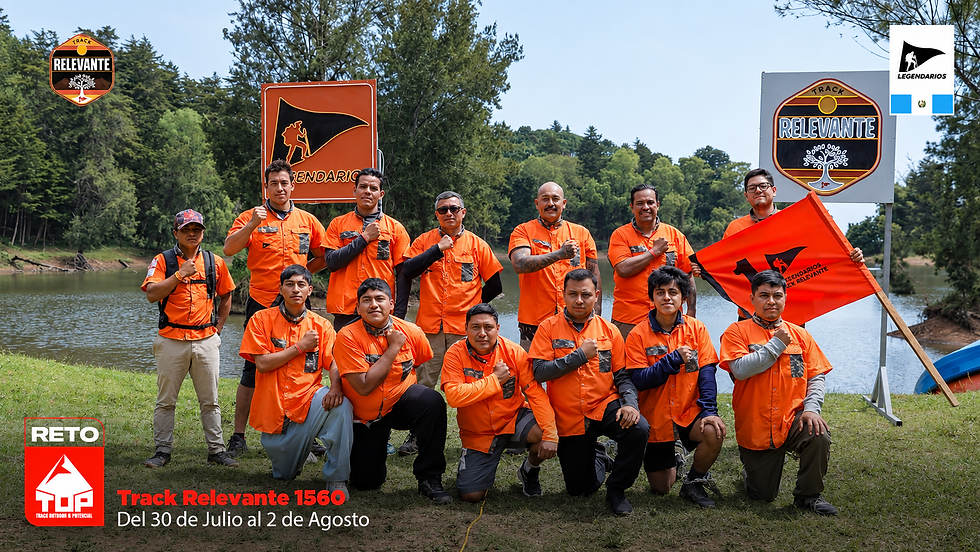
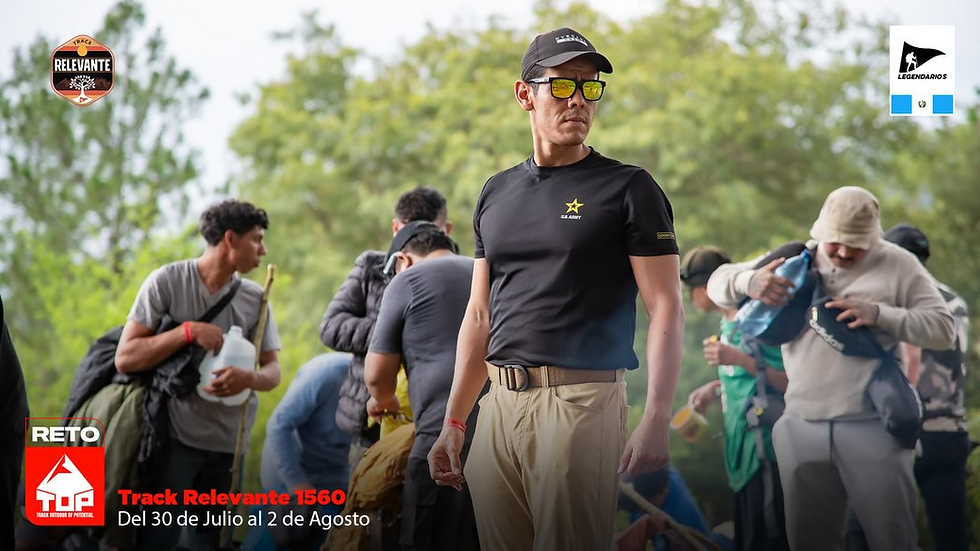
This year I also participated in Legendarios Relevante, an experience that I believe can add significant value for men who want to step outside their routines, work in community, and create space for Christ-centered reflection. At the same time, my experience as an athlete made me realize something I believe is important to state responsibly: this kind of retreat is much more valuable when a person arrives with an appropriate level of physical conditioning. Spirituality does not replace the laws of physiology. Preparing to walk for several hours, carry weight, tolerate elevation gain, manage fatigue, and function under changing environmental conditions allows a person to experience a demanding retreat more safely and extract greater spiritual value from what the retreat seeks to teach.
This way of integrating science, performance, and faith has also influenced how I think about business. I see no contradiction between using physiology to prepare for a mountain and recognizing that the mountain can become a place of encounter with God. I also see no contradiction between studying neuroscience to better understand attention, motivation, or recovery and using faith to ask where I want to direct those capacities. One discipline can help me understand the mechanism. The other can force me to ask about purpose.
Before Ecosystems, I Learned to Operate Living Systems
Long before I began speaking about venture architecture, payment orchestration, or business ecosystems, there was a professional stage that deeply influenced how I think and execute today: my time at ASA Promotions in the live entertainment industry, under the leadership of Juan Monge, Javier Arzú, and Gabriel Arzú. Working in that environment taught me how to operate in systems where planning is indispensable, but reality constantly introduces variables that no plan can fully anticipate.
A live public event is, in many ways, a living system. Artists, suppliers, production, security, access control, ticketing, concessions, backstage operations, logistics, sponsors, payments, and thousands of people all interact at the same time. The product may have been designed for months, but the real test begins when the public arrives, buys, pays, enters, and expects to receive exactly what it purchased. At that point, much of the room for theorizing disappears. If friction arises, it has to be identified, understood, and resolved quickly before it spreads across the entire experience.
That stage also helped me learn how to use my neurodivergence functionally, especially in problem solving, rapid pattern recognition, and the simultaneous management of multiple variables under pressure. Over time, I understood that this way of processing information needs structure in order to become an advantage. Without structure, it can create dispersion, but when properly managed it can make it easier to see seemingly separate problems as parts of the same system and resolve them with greater speed and effectiveness.
At ASA I also had the opportunity to participate in the early development stages of Ticketasa’s infrastructure, which became a particularly formative experience. I was involved in building a framework that combined technology, cybersecurity, e-commerce, and the ability to handle high user concurrency at moments when thousands of people could be trying to purchase simultaneously. That type of environment helped me understand in practical terms that selling online does not simply consist of setting up a payment gateway. Behind it are layers of availability, security, validation, processing, user experience, reconciliation, and operational risk that must work together for a transaction to actually be completed.
It was also one of my first serious opportunities to understand how consumer behavior changes when a purchase stops being exclusively local and begins interacting with payment methods, issuers, acquiring, currencies, technology platforms, and users who may be located in different places. Although at the time I did not yet call it payment orchestration, that experience helped me begin to understand the logic behind cross-border payments and all the invisible infrastructure that allows a person to pay for a good or service in a digital environment with the expectation that everything will work in seconds.
I learned that a sale can be lost for factors the customer never gets to see: a poor integration, a failure under high demand, a poorly designed security layer, an overly frictional authentication process, an incompatibility between systems, or a payment flow that does not respond correctly to real user behavior. That understanding stayed with me and reappeared years later, much more clearly, when I began structuring Valipay.
The connection now seems obvious to me. At Ticketasa, I learned that an apparently simple transaction can depend on a complex technological architecture. With Valipay, I am taking that same intuition to a much larger scale: building infrastructure capable of orchestrating payments among merchants, providers, currencies, jurisdictions, and different financial rails, seeking to reduce friction and increase the probability that a sale can be completed correctly within the context in which each merchant operates.

In other words, ASA taught me that the market does not interact only with the product. It interacts with the entire infrastructure that makes it possible to consume it. Years later, that lesson became one of the foundations of how I think about SYSE Group: identifying which parts of the system are fragmented, understanding why they are not communicating correctly, and designing an architecture that allows technology, users, regulation, and transactions to function in a coordinated way.
Roberto Argueta and the Value of Someone Believing in an Idea Before There Is Enough Evidence
But learning to solve problems would not have been enough without people who, at different moments, chose to trust my capacity before there was a sufficiently long track record to justify that confidence. One of those people has been Roberto Argueta, and the support did not come from him alone; his sons Saúl and, in particular, Eddy, also accompanied that support.
His guidance has a particularly important meaning for me because he believed in me from my first venture and later continued to be a source of support and perspective throughout my path as an entrepreneur. Roberto has built a multi-decade business career and currently serves as Chairman & Founder of Grupo Argueta, AREL Holding Group, AMPRO S.A., and Total Media Latam. His profile also reflects experience in business management, team leadership, and public relations.
Beyond titles, his real impact on me has been in another dimension. Years of entrepreneurship inevitably expose a person to moments when ideas seem much larger than the available resources, when results take longer than expected, and when it becomes very easy to confuse a temporary failure with a definitive judgment on our capacity. In those stages, having an experienced person who can still see potential while one is moving through uncertainty can completely change the trajectory.
Roberto, as an angel investor and mentor in my journey, was one of the people who believed in me at an early stage. That trust also created a responsibility for me: to keep building until what initially existed only as entrepreneurial intuition could become something real.
From him I have learned that building companies does not depend only on commercial aggressiveness or technical intelligence. There is also a less visible combination of grace, patience, humility, strength, and resilience that allows a person to move through periods when the reward is still not proportional to the effort invested. I like to think of that process as a kind of entrepreneurial alchemy, not in a mystical sense, but as the progressive transformation of elements that initially seem ordinary. An idea by itself has little value. A relationship by itself guarantees nothing. Knowledge without execution remains incomplete, and capital without direction can be wasted. But when vision, work, patience, discipline, relationships, mistakes, and learning begin to combine over enough time, what began as a hypothesis can become a company and, eventually, a transnational operation.
Grace matters as well because no entrepreneur builds entirely alone. There are always people who open a door, make an introduction, offer a second opportunity, invest while uncertainty is still high, teach something that saves years of mistakes, or simply remain close while results do not yet publicly justify the vision. Remembering who believed in us before we had proven very much also helps prevent future success from becoming arrogance.
Before Training Day: AlterCall, Ryan Blair, and a New Conversation About Leadership

Long before Training Day and the PRO Negocios Sobrenaturales gathering at Ilumina, a process of personal and entrepreneurial reconstruction had already begun for me. One of the first important doors was AlterCall, after receiving a personal invitation from its founder, Ryan Blair.
Through that community, I began connecting with entrepreneurs and leaders who are trying to build ambitious companies without completely separating growth, family, values, and a spiritual life centered on Christ. What interested me most was discovering a business conversation in which faith did not have to become dogmatism or a tool for judging people who think differently. Instead, it could become a reference point for examining how we lead, how we treat people, and what we ultimately do with the economic or professional power we accumulate.
One of Ryan’s ideas that resonated strongly with me is his emphasis on Christians modeling what they believe rather than using faith to alienate other people. That perspective also strengthened an ecumenical conviction in me: Catholic, evangelical, Protestant, and other Christ-centered entrepreneurs can work together around shared values without needing to turn every doctrinal difference into a boundary.
Justin Klahn and the Move from Inspiration to Strategy
Later, I had a particularly enriching conversation with Justin Klahn and, as a result, developed a friendship that went beyond doing business because Christ was at the center. For that reason, he had the generosity to give me something that was essential at the stage my venture was in: his book. Reading Innovators Handbook helped me strategically organize many intuitions I had been developing for some time. His work focuses on how to lead under pressure and execute real solutions in environments of absolute chaos. Throughout his innovation work, he has advised organizations such as Nike, Apple, Lululemon, and SpaceX, as well as figures such as Kanye West. One of his most powerful ideas is that if the problem is not explicitly and collectively defined, much of the activity that follows can become motion without real progress.
For an organization with several business lines, that warning is fundamental. Diversification can appear to be a strength and quickly become dispersion if there is no clarity around priorities, ownership, and outcomes. Justin also insists on separating signal from noise, reminding us that much of the information we receive consumes attention without actually changing results. His approach demands the discipline to identify what truly changes the direction of a decision.
His view of accountability was equally useful to me: when no one clearly owns an outcome, shared responsibility can become drift. All of this again reminded me of sport. An athlete can train extremely hard and still be training incorrectly. A company can work frenetically and still be solving the wrong problem.
These conversations began helping me convert purpose into business architecture.
Mondays at Díaz-Durán: Business, Law, Responsibility, and Faith in Guatemala
Another important part of this process has been the Monday gatherings we share with Pastor Boris Gabriel at Díaz-Durán y Asociados, where entrepreneurs, attorneys, and leaders can discuss values, responsibility, business, and law under the principles of Christ. These spaces have been especially important to me because they connect three dimensions that are often studied separately: business activity, the legal framework, and Christian principles.
My business and legal education has increasingly led me to believe that law should not be used to suffocate economic initiative, but to protect rights, establish certainty, limit arbitrariness, and allow people to create, contract, compete, invest, and innovate. I find an important convergence here with many of the principles of Austrian economics and libertarian thought, particularly private property, individual responsibility, freedom of contract, decentralization, competition, and limits on arbitrary power. In that process, I also want to thank IureCo Advice Group for opening its doors to me so I could contribute in my role as Of Counsel, Legal Tech & Digital Business Consultant, supporting founders and organizations in contract structuring, legal and strategic advisory, commercial frameworks, risk management, compliance, governance, and the adoption of a LegalTech mindset aimed at building more efficient and scalable legal processes. It has been especially valuable for me to take these ideas from the academic plane into real business cases, collaborate with different stakeholders, and work toward a view of law as a tool for responsible execution and growth, not simply as a preventive barrier.
That practical experience at IureCo, together with the spaces for legal and business reflection I have found at Díaz-Durán y Asociados and the academic training I have received at ADEN, has allowed me to validate a conviction that I now consider central to how I build companies: the best legal framework is not the one that generates more complexity, but the one that protects rights, reduces arbitrariness, and allows innovation to occur with clarity, responsibility, and certainty. Being in that environment also helped me contrast with legal professionals many of the ideas I was developing academically in parallel. During my Master’s in Business Law at ADEN, with a specialization in LawTech, Artificial Intelligence, and Project Management, I decided to use my Final Master’s Project to address a problem I did not want to leave only inside a classroom: how to rebuild Valipay and structure a financial business capable of using an architecture of global jurisdictions to develop a transnational payment orchestrator that helps merchants accelerate sales and transactions in the different markets where they operate.
I would also like to thank the International Conservative Leadership Council (ICLC) and especially Dr. Luis Figueroa, Chairman and Founder of the organization, for opening the door for me to contribute and publish a reflection on economic freedom, digital sovereignty, and financial innovation in Guatemala. That opportunity came at a particularly relevant moment in my research because it allowed me to take several of the conclusions I was developing in my Final Master’s Project beyond the academic setting.
As I analyzed the environment in which I had initially tried to build within the FinTech sector, I came to understand that certain limitations in the fiscal, legal, and regulatory framework could hinder financial innovation, slow the development of new business models, and limit the ability of the national private banking sector to compete with more dynamic markets. However, that conclusion did not mean abandoning the idea. On the contrary, it broadened my perspective: if one jurisdiction does not yet offer the right conditions for a particular type of financial infrastructure, an entrepreneur can also evaluate other jurisdictions, structures, and markets that provide greater certainty, openness to innovation, and a sufficiently attractive market share to build responsibly.
The article with ICLC helped me precisely to test and communicate that thesis: that the regulatory boundaries of one country do not have to become the intellectual or entrepreneurial boundaries of someone seeking to solve a global problem.
The project received a final grade of 95/100, which meant much more to me than an academic score. It represented validation that many of the ideas I had been connecting around regulation, FinTech, LawTech, jurisdictions, technology infrastructure, and cross-border commerce could be organized into a coherent proposal. Valipay then began to consolidate even more clearly as a central piece in the reconstruction of SYSE Group.
I also want to thank ADEN for granting me a half entrepreneurship scholarship to pursue this master’s degree. The opportunity arrived at a moment when I needed to connect years of business experience with a more structured understanding of business law, technology, legal innovation, artificial intelligence, and project management. That training became part of the intellectual infrastructure from which I am now rebuilding SYSE.
What I have learned during the Monday gatherings with Boris and within Díaz-Durán has reinforced another very specific conviction: a good entrepreneur or lawyer should not limit himself to asking what the law permits. He should also ask how that knowledge can be used properly to protect citizens, expand opportunities, and prevent law from being used to manufacture privilege or unnecessarily restrict other people’s ability to prosper.
From my libertarian perspective, an economy in which opportunities depend on political relationships, tailor-made regulations, or privileged access to power does not represent a truly free market. It represents institutional capture. From my faith, I reach a similar conclusion: if we use capital, information, influence, or legal knowledge to unfairly prevent others from competing, we are contradicting basic principles of responsibility toward our neighbor. That is precisely why I also value being part of the Guatemalan Entrepreneurship Association, AGE, an organization created with the mission of strengthening entrepreneurship in Guatemala and building better conditions for new ideas to become sustainable companies. AGE was created by five founding companies that chose to combine experience, tools, contacts, financing, and knowledge to offer entrepreneurs a clearer roadmap toward the creation and consolidation of their projects.
This mission is especially relevant to me in Guatemala because the growth of our population and the transformation of the labor market make it clear that it will not be enough to expect traditional structures to generate by themselves all the jobs future generations will need. Entrepreneurship can therefore become a path toward economic mobility, job creation, and social innovation, but for that to happen we need an environment that facilitates company creation instead of turning every step into a barrier. That is also the logic that has led AGE to participate together with the Guatemalan Franchise Association, AGF, and to collaborate with Zona Pradera on initiatives such as “Sales + Technology, The New Engine of Business,” seeking to improve the ecosystem, connect entrepreneurs with resources, and encourage more people to transform real problems in the country into opportunities to build solutions.
For me, that participation is directly connected to the vision I am trying to apply within SYSE Group. A free market is not only about reducing obstacles; it also needs access to knowledge, networks, capital, infrastructure, and mechanisms that allow people to compete under more open conditions. When someone receives a better roadmap, finds financing, gains access to relevant contacts, or learns how to structure a company correctly, we are not replacing the market; we are helping that person participate in it with greater capacity. This is where I find a strong convergence between my libertarian vision, AGE’s work, and my faith: creating conditions in which people can take responsibility for their own future, generate value, and at the same time contribute to solving the economic and social problems of their communities.
That is why Matthew 7:12 has so much force for me even in economics and law: “Whatever you want others to do for you, do also the same for them.” Applied to the market, that means not asking for privileges we would deny our competitors, not abusing a contractual clause we would consider unfair if we were on the other side, and not using regulation as an artificial barrier to prevent someone else from competing.
Guatemala needs economic freedom, but it also needs character. It needs entrepreneurs capable of competing by creating value rather than buying influence, lawyers capable of using their knowledge to protect citizens rather than simply shield structures of power, public officials who understand that they administer authority rather than own it, and citizens who stop treating corruption as an inevitable condition of economic activity.
From a Diversified Company to an Ecosystem of Seven Verticals
All of these experiences have profoundly changed how I describe SYSE Group. The company was born years ago around recruitment, talent, consulting, and business development, but over time those capabilities began connecting with technology, financial infrastructure, law, health, workforce mobility, tourism, commodities, and real estate development. I no longer want to describe SYSE as a company that simply owns several projects. We are building an architecture of seven interconnected verticals designed to share knowledge, relationships, technology infrastructure, commercial capabilities, and a common financial layer.
That is why the expression that best represents this new stage is:
SYSE Group | Where Ventures Become Scalable Ecosystems. Architecting ventures. Orchestrating growth. Building what comes next.
At the center of that architecture is Valipay, our FinTech and WealthTech vertical. Its role is to become the group’s financial and transactional engine, integrating payment orchestration, cross-border settlement, digital assets, financial APIs, treasury capabilities, and progressively, wealth and capital-related capabilities. The logic is simple: every SYSE vertical generates economic activity, and Valipay aims to become the infrastructure through which that activity can transact globally.
The second vertical is FloWell, our HealthTech LLM DApp ecosystem. FloWell seeks to combine technology-assisted medical intelligence, integrative health, longevity, telemedicine, performance, and medical tourism. It is also where the work we are developing with Dr. David Neuman around physiology, recovery, musculoskeletal health, longevity, and human performance begins to integrate. Valipay can support subscriptions, health-related payments, international patient flows, and settlement within the ecosystem.
The third vertical is Orquídeas de Ciudad Vieja, our bio-urban real estate development project. The vision is to build a mixed-use model that connects real assets, technology, wellness, and regenerative urban design. I do not see it simply as a real estate project, but as an opportunity to rethink how housing, commerce, community, nature, and technology can coexist within a single architecture. Valipay would have a role there related to transactional infrastructure, capital flows, and cross-border participation.
The fourth vertical is Handbroad, our global workforce mobility infrastructure. Its objective is to connect companies with international talent through recruitment, nearshore operations, workforce administration, and legal mobility mechanisms such as H-2A and H-2B. It is not designed as an isolated recruitment agency, but as an ecosystem in which talent acquisition, compliance, international deployment, payroll, operations, and financial settlement can connect within the same architecture. Valipay functions there as a financial rail for cross-border funding, worker payments, reconciliation, and settlement.
The fifth vertical is Roots Global, focused on commodities and origin-based products. Its starting point is Guatemalan specialty coffee and jadeite, but the architecture is designed to expand into other commodities and high-value products from Latin America. The intention is to facilitate connections among producers, buyers, and international markets, using Valipay for international settlement, producer payments, treasury coordination, and financial traceability.
The sixth vertical is MISE, focused on tourism, hospitality, and the commerce of experiences. Its goal is to build a direct-to-consumer infrastructure capable of aggregating, packaging, and commercializing premium Guatemalan experiences for international markets. Its initial deployment focuses on adventure tourism and experiences such as Acatenango Summit, connecting The Summit Force for mountain execution and positioning, SwissHotelier for hotel connectivity, and Valipay as the payments, bookings, and settlement layer. In this way, MISE is not being launched simply as a tourism marketplace, but as a network in which experiences, hospitality, and payments function as one system.
The seventh vertical is ClickLegal, our LawTech and cross-border legal services line. Its purpose is to develop a technology-enabled legal ecosystem for corporate, commercial, and cross-border matters, connected to Valipay for international billing, payments, and financial infrastructure related to client operations.
These seven verticals are not conceived as isolated startups. The intention is precisely to avoid forcing each company to rebuild technology, commercial infrastructure, legal knowledge, relationships, distribution channels, or financial systems from scratch. The model seeks to share capabilities and allow an opportunity generated in one vertical to produce value for others. SYSE’s design includes technical architecture, jurisdictional strategy, operating models, internal leadership, strategic partners, commercial relationships, distribution channels, regulatory considerations, and financial infrastructure as transversal elements across the group.
This is why I use the word orchestrating when I describe SYSE. The advantage is not simply in owning different assets, but in getting those assets to communicate with one another. A Handbroad commercial relationship may need ClickLegal. A Roots transaction may use Valipay. A MISE experience can connect hospitality and international payments. A development such as Orquídeas de Ciudad Vieja can integrate real estate, wellness, technology, and capital. FloWell can use medical capabilities, data, and transactional infrastructure. What we are trying to create is a system in which every new relationship increases the potential value of the ecosystem as a whole.
This architecture also reflects what I have been learning since my years at ASA Promotions and Ticketasa. At a public event, the user does not distinguish between ticketing, cybersecurity, access, payments, production, and logistics. To that person, there is a single experience. In the same way, a company’s customer should not have to understand all the internal systems that make a transaction possible. Our responsibility is to make those systems work together behind the experience.
That is also the connection to Valipay. My early exposure to e-commerce, high user concurrency, digital infrastructure, and payments at Ticketasa helped me understand that the economic problem is often not the absence of demand, but the infrastructure that prevents supply and demand from meeting correctly. We are now taking that intuition into a transnational architecture where merchants, users, providers, currencies, and jurisdictions can interact with less friction.
The final objective is not to build seven companies simply for the sake of diversification. It is to build a business platform capable of creating network effects, reusing infrastructure, and transforming different economic problems into coordinated opportunities for value creation.
This is also where a vision that, for me, summarizes the long-term ambition appears:
From Guatemala to the Moon, and beyond the heavens.
I do not interpret that phrase as an invitation to abandon Guatemala, but exactly the opposite. It means demonstrating that from Guatemala we can also design ecosystems, financial infrastructure, HealthTech, LawTech, workforce mobility, real estate, commodities, and tourism platforms capable of competing internationally, and use that learning as a platform to participate in increasingly complex industries.
That is the kind of organization I want SYSE Group to become: not a passive holding company of independent businesses, but an architecture where ventures become scalable ecosystems and shared infrastructure allows the growth of one vertical to strengthen the others.
Prosperity, Freedom, and the Wrong Altar
When I speak about helping heal people’s economic reality, I am not talking about giving away wealth or promising automatic prosperity. I am talking about increasing their economic capacity: allowing a person to access work, sell, collect payments, start a business, offer a service, commercialize a product, hire talent, move value, receive healthcare, or participate in a tourism experience with less friction.
That idea is deeply connected to my view of Austrian economics and libertarian thought. Knowledge is distributed among millions of people. Markets allow needs, resources, prices, innovation, and decisions to coordinate without requiring a single authority to understand absolutely everything. Economic freedom enables discovery, but it needs institutions that protect property, contracts, competition, and responsibility.
At the same time, Christ reminds me of something no economic theory can answer on its own: what we use that freedom for.
That is why I also reject the so-called prosperity gospel when it turns a relationship with God into an economic transaction. Creating wealth legitimately through innovation, work, investment, and entrepreneurship does not strike me as incompatible with faith. The problem begins when money stops functioning as a tool and starts occupying the altar that belongs to God. At that point, faith can become a formula for enrichment, an offering can become an investment made in expectation of return, and religious authority can become a platform for power.
The image of Jesus passing through those who tried to throw Him from the cliff in Luke 4:28-30 represents a powerful contrast for me. Jesus did not modify the truth in order to preserve popularity, nor did He turn His message into a tool for controlling a crowd. When what He said became uncomfortable, He continued on His way. An entrepreneur also needs to understand that not all growth is good simply because it increases revenue. Not every expansion justifies the way it was achieved.
Proverbs 5:21 expresses it very directly: “For the Lord sees clearly what a man does, and He examines every path he takes.” That principle can also be applied to a contract, a negotiation, an employment relationship, a commercial strategy, or a legal structure.
Psalm 59:16 adds another dimension: “But as for me, I will sing of Your power; each morning I will sing with joy about Your unfailing love. For You have been my refuge, a safe place when I am distressed.” For an entrepreneur, remembering where the deepest form of security lies can also be an antidote to the temptation to turn wealth, valuation, or recognition into identity.
The image of pearls before swine reminds me of another dimension of that responsibility. In business, not every opportunity deserves persistence, not every client is appropriate, and not every alliance should be pursued. Perseverance does not mean investing time, energy, capital, or knowledge indefinitely in a place where what we offer has already been rejected or where there is a deep incompatibility of principles. There is also wisdom in knowing when to walk away.
Training Day and a Conversation That Began Before the Event
All of this was already taking place when Training Day 2026 arrived, and that is why I especially want to thank Alexis Canahuí for inviting me to participate as an ambassador. One of the reasons I am taking the time to write this reflection is precisely to return part of the value I received and help more entrepreneurs discover the spaces being created in Guatemala to exchange experiences, ideas, and conversations that can accelerate other people’s growth.
Training Day was not simply a succession of talks for me. It became a point of connection among many questions I had already been exploring around performance, venture building, strategy, faith, and purpose.
Before the event, Diego Noriega contacted me directly to ask whether I would attend because he wanted us to have a conversation. When we finally had the opportunity to do so, the conversation went far beyond startups. We spoke about business, discipline, leadership, energy management, personal transformation, and purpose. We found several parallels between processes we had both lived through, and Diego also shared with me that he had recently begun attending church again.
I received that with respect because it is not my place to interpret for him what that process means spiritually. Still, I found it meaningful that a conversation that began around business ended up exploring questions about inner life and purpose.

When Diego spoke about coming from the interior of Argentina and about public speaking not being a natural ability for him at first, but rather something he developed over the years, I immediately thought of Moses. Exodus 4:10 recounts how Moses doubts his capacity to communicate and describes himself as “slow of speech and tongue.” Yet the mission ultimately developed capacities he initially doubted he possessed.
That was the first synchronicity I noticed.
Diego spoke about CEOs who train like high-performance athletes and build systems that allow them to execute under pressure. I had spent years using sport precisely as a school for learning how to manage body, mind, and energy. He spoke about systems. I was rebuilding SYSE around systems. He spoke about processes of personal transformation, and I was moving through my own.
Later, that conversation also influenced more concrete work around transforming SYSE into a repeatable commercial institution. The model I have been structuring follows a sequence of Venture Architecture, Validation, Product, Commercialization, Transaction, Revenue, Optimization, and Scale. The logic is very similar to what I have done for years as an athlete: plan, execute, measure, recover, adjust, and act again.
Ilumina and the Second Appearance of Moses
A few days later, I attended PRO Negocios Sobrenaturales at Ilumina, and another coincidence appeared that I found especially meaningful.
Boris Gabriel began speaking precisely about Moses, but not from the perspective of his difficulty speaking. This time, the lesson centered on what he already had in his hand.

In Exodus 4:2 comes the question: “What is that in your hand?” Moses answers that it is a staff. Boris used that scene to develop a deeply entrepreneurial analogy. Entrepreneurs often remain waiting for more capital, better contacts, a perfect team, or ideal conditions to begin, when perhaps the first question should be what knowledge, tools, relationships, and capacities they already possess.
The staff was an ordinary object. In business terms, it could represent knowledge, experience, a computer, a relationship, reputation, modest savings, a first customer, or an idea that is still imperfect. There is a logic there that is very close to the Minimum Viable Product. Entrepreneurship rarely begins by building the entire dreamed infrastructure. More often, it begins by using available resources to test whether a market hypothesis is correct.
Then comes another instruction in Exodus 4:3: “Throw it on the ground.” As long as the staff remained in Moses’ hand, it remained simply a staff. In entrepreneurship, an idea can remain inside a presentation or in our imagination for years. Only when it comes into contact with customers and the market does it begin producing real information.
The next part is even more interesting because the staff becomes a serpent and fear appears. Moses is then instructed to take it again. Boris connected that scene with entrepreneurial risk.
Entrepreneurship does not mean eliminating uncertainty. It means developing enough judgment to manage it. There will be moments to pivot, reduce costs, change a product, abandon a hypothesis, invest, renegotiate, or simply accept that something we imagined did not work the way we expected.
Boldness does not mean recklessness. It means learning how to decide when complete certainty does not exist.
Guissela Rojas: Need, Vision, and Trial and Error

The talk by Guissela Rojas, co-founder of Girl Sensation, added another very important dimension. She spoke about how necessity can push a person to build something others consider impossible and how that process forces us outside our comfort zone.
Her experience was not presented as a story in which everything worked from the beginning. She spoke about trial and error, trying again, learning, correcting, and continuing. That process allowed her company to develop a presence across Latin America through franchising and, as she explained, they even had to build their own franchise models from scratch instead of handing that responsibility entirely to an outside organization.
That point struck me because it illustrates the moment when a company truly begins to scale. An organization stops depending exclusively on knowledge that exists in its founders’ heads and starts converting experience into methods, processes, and standards that other people can execute.
Guissela connected that experience with faith and vision. Vision allows us to imagine a reality that does not yet exist, while faith helps maintain direction when there is still not enough evidence to guarantee the outcome. But neither of them eliminates the need to execute. In fact, execution is where both are tested.
Flow, Neuroscience, and Synchronicity
Here I also find an interesting connection with Steven Kotler’s work on flow states. One of the conditions associated with flow is reaching a point where the challenge demands our abilities without simply becoming chaos. The challenge must force growth and sustained attention while continuous feedback allows us to adjust behavior. That is remarkably similar to what happens in a company when the founder stops working only with hypotheses and begins receiving real information from the market.
Andrew Huberman’s educational work on attention, motivation, learning, and adaptation also offers useful tools for understanding why discipline and habit formation matter so much. Our nervous system learns through repetition, effort, feedback, and adaptation. For me, neuroscience can help explain some of the mechanisms through which we transform intention into behavior, but it does not necessarily answer, by itself, the question of where that behavior should be directed.
That is where the spiritual dimension reappears.
I also find Carl Jung’s concept of synchronicity useful, not as automatic proof of supernatural causation, but as a way of understanding certain coincidences that acquire particular meaning for the person experiencing them. Thinking spontaneously about Moses after speaking with Diego, and then finding myself only days later listening to Boris develop another entrepreneurial lesson around Moses, was, at the very least, a coincidence powerful enough to make me pay attention.
I do not need to interpret every coincidence as an instruction. I prefer to use it as an invitation to discernment.
What All of This Is Doing to SYSE Group
When I look at the entire sequence from a distance, I can see a thread that helps explain why SYSE is taking the form it has today.
ASA Promotions taught me how to operate complex systems and resolve friction under pressure. Ticketasa gave me an early understanding of how technology, cybersecurity, e-commerce, and payments must coordinate when thousands of users interact simultaneously. Roberto Argueta taught me the value of patience and of believing in an idea before there is sufficient external validation. Sport taught me to manage resources under pressure. The mountain taught me humility before variables I cannot control. Bárbara Padilla reinforced the importance of preparation for extraordinary goals.
David Neuman helped me deepen my understanding of physiology, health, and performance. Miles Sherpa brought me closer to mountain culture and The Summit Force. Legendarios reinforced the relationship among physical challenge, community, and Christ-centered reflection. Ryan Blair brought me into contact with an entrepreneurial community oriented toward purpose. Justin Klahn added tools for strategy, clarity, and accountability. The Monday gatherings with Boris and Díaz-Durán connected law, economic freedom, and responsibility. ADEN allowed me to give academic and legal structure to Valipay. Alexis Canahuí opened the doors of Training Day to me as an ambassador. Diego connected business leadership with a high-performance mindset. Boris returned me to Moses and the question of what we already have available. Guissela reminded me that no vision scales without moving through trial, error, and learning.
All of it is converging in the reconstruction of SYSE.
I do not want to build an organization that depends permanently on inspiration or on my individual capacity. I want to build an institution capable of learning, correcting, adapting, and scaling without losing the principles that justified its existence.
I want our different lines of business to create real opportunities, reduce friction, and expand economic capacity. I want someone to be able to access a job, sell a product, move money, connect with buyers, receive better services, participate in global markets, or live experiences that were previously beyond reach.
If we build that architecture correctly, wealth will stop being only a number on financial statements and can become a measure of how much real value we are able to create and distribute through the ecosystem.
For me, this is a much more coherent way to connect Austrian economics, libertarian thought, and my Christian faith. Austrian economics helps me understand why knowledge is distributed among millions of individuals and why economic freedom allows solutions to emerge that no central structure could fully anticipate. Libertarian thought reminds me that power needs limits and that people should retain broad spaces to direct their own lives. Christ reminds me that this freedom does not exist only to serve myself, but can also become a capacity to serve my neighbor.
That is why I value spaces such as AlterCall, the Monday gatherings, Training Day, PRO Negocios Sobrenaturales, Legendarios, and the sports communities built around the mountains. Not because all of them must share exactly the same vision, but because each can contribute a different dimension to the development of better entrepreneurs and better human beings.
For the same reason, I want to invite other Christian entrepreneurs, whether they live their faith through a Catholic, evangelical, Protestant, or another Christ-centered tradition, to participate in these spaces. We do not need to agree on absolutely everything in order to speak about integrity, freedom, responsibility, service, innovation, business, family, science, performance, and purpose.
After more than 65 competitions, 12 years of entrepreneurship, mountains, triathlons, marathons, HYROX, business mistakes and failures, academic learning, and encounters with people who have expanded the way I think, my conclusion is less complicated than I once imagined. True high performance is not about living permanently at the limit. It is about developing enough discipline to manage our capacity, enough intelligence to build systems, enough humility to correct course when reality proves us wrong, and enough discernment to remember why we decided to begin.
That is the kind of leadership I want to continue learning and the kind of organization I want to build from Guatemala.
SYSE Group | Where Ventures Become Scalable Ecosystems. Architecting ventures. Orchestrating growth. Building what comes next.
From Guatemala to the Moon, and beyond the heavens.
Intellectual Property, Authorship, and Technological Use Notice
© 2026 Juan Luis Jordan Flores-Calderón / SYSE Group. All rights reserved.
This article constitutes an original intellectual and business work. Its writing, narrative structure, selection and organization of content, reflections, analyses, conceptual models, and other original elements are protected by applicable intellectual property and copyright laws, as well as any applicable international treaties.
References in this article to SYSE Group, Valipay, FloWell, Orquídeas de Ciudad Vieja, Handbroad, Roots Global, MISE, ClickLegal, and other initiatives connected to the business ecosystem described herein do not imply any assignment, license, or authorization to use their trademarks, trade names, designs, technical documentation, frameworks, business architectures, methodologies, operating models, regulatory strategies, transactional structures, know-how, trade secrets, or other intellectual property assets or related proprietary information. Public disclosure of certain general concepts should not be interpreted as a waiver of any rights that may apply to developments, documentation, software, trademarks, designs, databases, confidential information, or other legally protectable assets.
Except where prior express written authorization has been granted or where an applicable legal exception exists, the substantial reproduction, modification, adaptation, distribution, commercialization, publication, republication, or commercial use of the content of this article in a manner that could create confusion regarding its authorship or origin is prohibited. Any academic, journalistic, or professional quotation or reference should preserve the integrity of the content and properly acknowledge Juan Luis Jordan Flores-Calderón and SYSE Group as the source where appropriate.
Publication of this article does not grant any implied license to carry out systematic scraping, bulk data extraction, text and data mining, dataset generation, embeddings, content cloning, training, fine-tuning, or substantial incorporation of the text into automated systems or computational models for commercial purposes, except with the express authorization of the rights holder or where applicable law expressly recognizes a right or exception that cannot validly be restricted by this notice.
Quotations, trademarks, names, works, concepts, or statements attributable to third parties remain the property of their respective authors or rights holders and are included solely for reference, analysis, commentary, or contextualization. Their inclusion does not imply appropriation of third-party rights, sponsorship, commercial association, or institutional endorsement unless expressly stated otherwise.
The business concepts presented in this article are informational and reflect the vision, evolution, and strategic architecture of the author and SYSE Group at the time of publication. Disclosure of a general business idea or principle does not, by itself, make that idea subject to exclusive copyright protection. Certain technological, commercial, contractual, regulatory, or strategic components may separately be subject to confidentiality agreements, trade secret protection, trademark registrations, software rights, intellectual property contracts, or other legal protection mechanisms.
No license, assignment, or transfer of rights is granted through silence, publication, access, or reading of this document. All rights not expressly granted are reserved.


Comments